
 Lawrence Cohen
Lawrence Cohen
Lawrence Cohen
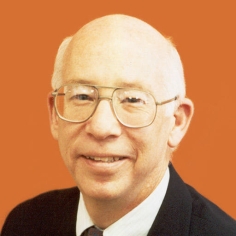

Energy-Efficiency Expert Karl Brown Named 2010 UC Sustainability Champion
On the UC Berkeley campus, which has an annual energy bill of about $35 million, new energy monitoring systems have been installed in 10 buildings, and annual savings of $650,000 have been recorded.
California Team to Receive up to $122 Million for Energy Innovation Hub to Develop Method to Produce Fuels From Sunlight
U.S. Deputy Secretary of Energy Daniel Poneman announced a new award of up to $122 million to establish an Energy Innovation Hub aimed at developing revolutionary methods to generate fuels directly from sunlight.

Cash Rewards and Counseling Could Help Prevent STIs in Rural Africa
Giving out cash can be an effective tool in combating sexually transmitted infections in rural Africa, according to a study which found that people who were offered $60 over 12 months to stay free of STIs had a 25 percent lower prevalence of infections.

UC Berkeley Psychologists Bring Science of Happiness to China
As the ranks of China's millionaires continue to grow, the pursuit of wealth in the nation is fast outpacing mental health and wellbeing, according to psychologists at the University of California, Berkeley, who are seeking to correct that imbalance and spread the science of happiness in China.

Coral Tests Show Fast Construction Pace for Polynesian Temples
Ancient Polynesians went from building small-scale temples to constructing monumental, pyramid-shaped temples in just 140 years, not in four or five centuries as previously calculated, according to research led by a University of California, Berkeley, anthropologist and published this week in the print edition of the journal Proceedings of the National Academy of Sciences (PNAS).
Capturing Carbon
Researchers at Berkeley and other universities to find ways to capture carbon dioxide, produced by burning coal and natural gas, from the waste stream of power plants so that it can be sequestered underground.

Tibetans Adapted to High Altitude in Less Than 3,000 Years
UC Berkeley's Rasmus Nielsen teamed up with Chinese researchers to compare the genomes of Tibetans living above 14,000 feet to Han Chinese living at essentially sea level. They found that within the last 3,000 years, Tibetans evolved genetic mutations in a number of genes having to do with how the body deals with oxygen, making it possible for Tibetans to thrive at high altitudes while their Han relatives cannot.

Labor Center Launches Monthly Black Jobs Report
UC Berkeley's Center for Labor Research and Education officially launched a series of monthly reports that highlight the employment outlook in the black community as national jobless numbers hover around 10 percent and African Americans fare far worse.The Labor Center's "Black Employment and Unemployment" detailed data brief for June will be available online shortly after researchers assess a monthly national jobs report to be issued Friday from the U.S. Bureau of Labor Statistics.