Q&A: Barbara Abrams on her prenatal-nutrition research
Professor Barbara Abrams, newly elected to the Institute of Medicine, engages in a Q&A about her research on prenatal nutrition.

Professor Barbara Abrams, newly elected to the Institute of Medicine, engages in a Q&A about her research on prenatal nutrition.
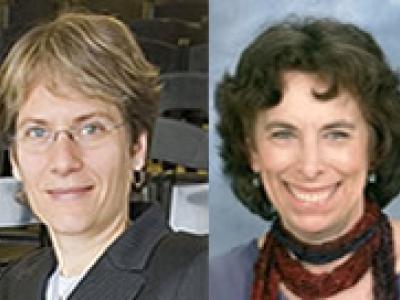
Barbara Abrams, professor of epidemiology and of maternal and child health, and Carolyn Bertozzi, professor of chemistry and of molecular and cell biology, have been named to the prestigious Institute of Medicine (IOM), one of the highest national honors in the fields of health and medicine.
Video shows how Berkeley scientists use amazing equipment to develop materials to make future nuclear power plants more reliable and durable.
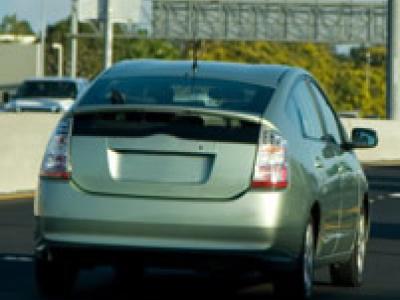
The end of a California program granting free access to carpool lanes by solo drivers of hybrid cars has unintentionally slowed traffic in all lanes, according to a new report by researchers at UC Berkeley’s Institute of Transportation Studies. It turns out that when regular-use lanes became more congested with the addition of more hybrids, the carpool lanes slowed down as well. The transportation engineers explain this counterintuitive result.
Emmanuel Saez, a UC Berkeley economist, received a 2010 MacArthur “genius” award for his research on the growing income gains of super-wealthy American households and the parallel income erosion of the other 99 percent of the nation. In a Q & A, Saez talks about the “Occupy Wall Street” movement, in light of his work.
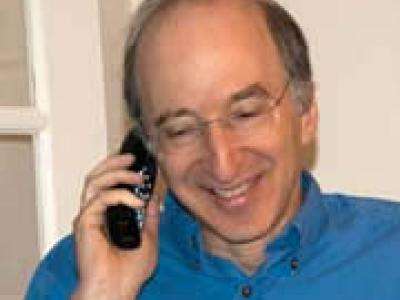
For Berkeley physicist Saul Perlmutter, Tuesday, Oct. 4 began before 3 a.m. with a press call from Sweden, and soon a meaningful moment with his sleepy but excited 8-year-old. Then — quickly and inevitably — came the deluge of phone calls and e-mails, celebratory events and photo ops. And, it goes without saying, a coveted parking pass.
One white dwarf or two? That’s what astronomers have been asking about Type Ia supernovae, the key to measuring cosmic distance. Is the explosion from one white dwarf grown fat from feeding off another star, or are two white dwarfs merging? A new study suggests the latter.
Saul Perlmutter, UC Berkeley professor of physics and LBNL senior scientist, will share the 2011 Nobel Prize in Physics with two other scientists, including former UC Berkeley postdoc Adam Riess, for their discovery that the expansion of the universe is accelerating. This discovery in 1998 led to the realization that the universe is largely composed of an enigmatic “dark energy.”