Research restructuring leads to net reduction in jobs

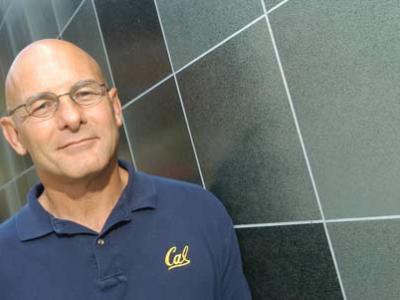
In mid-July, Vice Chancellor for Research Graham R. Fleming announced that the dire budget circumstances facing the campus necessitated taking a hard look, as quickly as possible, at the structure of services and deployment of resources administered from his office.

Berkeley stakes science claim at Homestake gold mine

Berkeley stakes science claim at Homestake gold mine UC Berkeley and Berkeley Lab plan to turn South Dakota's Homestake gold mine into a world-class science complex, with underground experiments in astrophysics, physics, biology and earth science. South Dakota Gov. Mike Rounds, a big supporter of the effort, visited the campus and lab June 12 to cement the relationship and see what a large research complex looks like.

Microbe that can handle ionic liquids

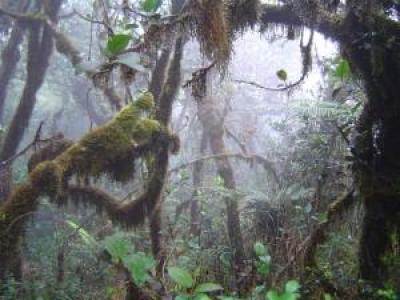
Researchers with the U.S. Department of Energy (DOE)’s Joint BioEnergy Institute (JBEI), a multi-institutional partnership led by Berkeley Lab, have identified a tropical rainforest microbe that can endure relatively high concentrations of an ionic liquid used to dissolve cellulosic biomass.

$30 million from DOE for carbon capture, sequestration

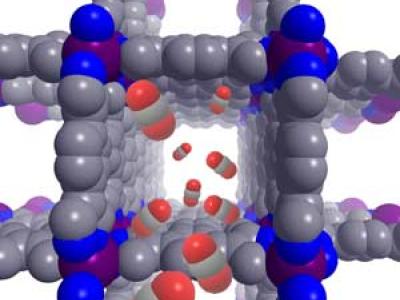
Two UC Berkeley faculty members will receive $30 million over the next five years from the U.S. Department of Energy to find better ways to separate carbon dioxide from power plant and natural gas well emissions and stick it permanently underground.


Speaker series on California climate change challenges

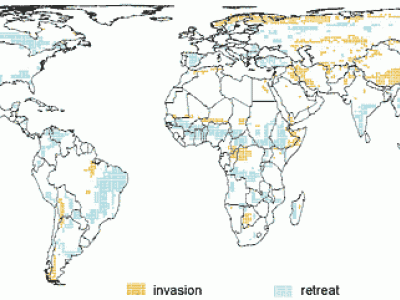
A new speaker series at UC Berkeley will explore the state's landmark climate control legislation's critical connections to sustainable development and land-use planning. The series, "Growing Sustainability in a Low-Carbon World," is being sponsored by UC Berkeley's Institute for Urban and Regional Development (IURD). 


Cheaper materials could be key to low-cost solar cells

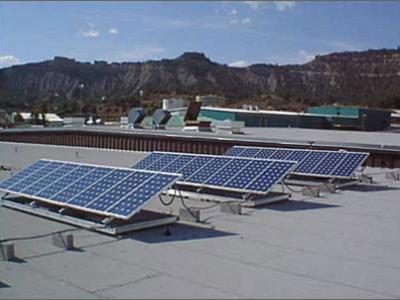
Unconventional solar cell materials that are as abundant but much less costly than silicon and other semiconductors in use today could substantially reduce the cost of solar photovoltaics, according to a new study from the Energy and Resources Group and the Department of Chemistry at UC Berkeley and Lawrence Berkeley National Laboratory.