

Research Bio
Sensation of environmental stimuli, thought, learning, memory, and other aspects of neuronal communication, hormone secretion and movement all rely on cellular electrical signals. The Brohawn Lab studies life’s electrical system from a molecular and biophysical perspective. The focus of the laboratory is on ion channels, transporters and their regulatory complexes that form gated pathways for ionic traffic across cell membranes. We aim to discover how these membrane proteins work at a mechanistic level and what they do in a biological context. We utilize a range of approaches including structure determination by cryo-electron microscopy, electrophysiology, biophysics, biochemistry, pharmacology and imaging. Their goals are to understand the molecular basis of sensory transduction and electrical signaling and to lay the groundwork for development of new approaches to promoting health and treating disease.
Research Expertise and Interest
neurobiology, structural biology, biophysics
In the News
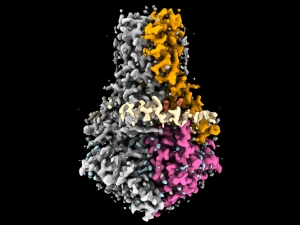
Unusual Coronavirus Protein Is Potential Drug Target to Fight COVID-19
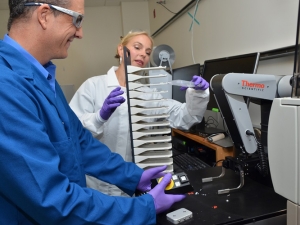
Scientists Pivot to COVID-19 Research, Hoping for Quick Results to Deal With Pandemic

Nine Young Faculty Named 2020 Sloan Fellows
Teaching
Scientific Communication and Experimental Rigor Graduate Seminar [MCELLBI 287 - 070]
Research [MCELLBI 292 - 070]
Neurobiology Laboratory [NEU 171L - 001]
Neuroscience Graduate Research [NEU 292 - 004]
Neuroscience Research Review [NEU 295 - 004]
Research [BIOPHY 292 - 001]
Research Seminar: Faculty Evening Research Presentations (FERPS) and Student Evening Research Presen [BIOPHY 293B - 001]
Molecular and Biophysical Neuroscience [MCELLBI 269E - 001]
Research [MCELLBI 292 - 070]
Neuroscience Graduate Research [NEU 292 - 004]
Neuroscience Research Review [NEU 295 - 034]
Research [BIOPHY 292 - 001]
Research Seminar: Faculty Evening Research Presentations (FERPS) and Student Evening Research Presen [BIOPHY 293A - 001]
Molecular and Biophysical Neuroscience [MCELLBI 269E - 001]
Research [MCELLBI 292 - 070]
Molecular and Cellular Neurobiology [MCELLBI C260 - 001]
Neurobiology Laboratory [NEU 171L - 001]
Neuroscience Graduate Research [NEU 292 - 004]
Neuroscience Research Review [NEU 295 - 033]
Molecular and Cellular Neurobiology [NEU C260 - 001]