
Research Bio
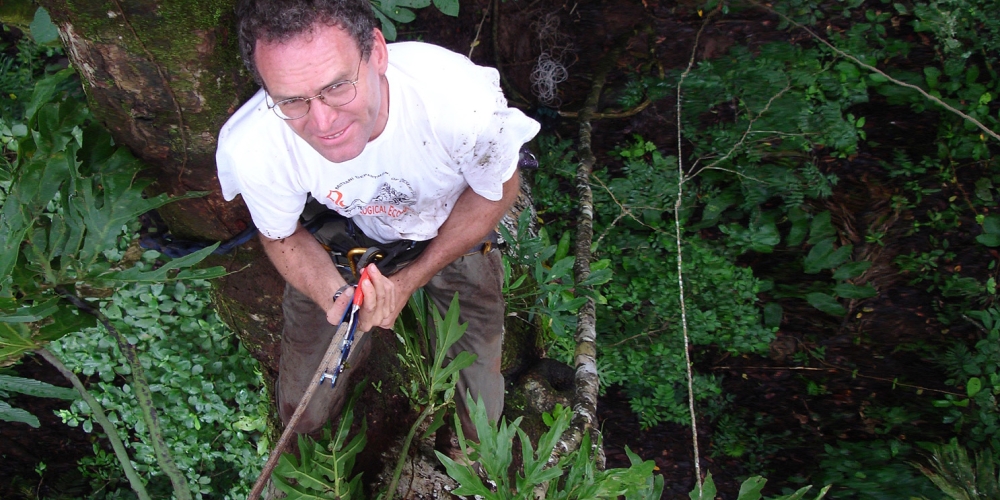
Robert Dudley is a Distinguished Professor in the Department of Integrative Biology, and a Research Associate at the Smithsonian Tropical Research Institute in Panama. His research is primarily concerned with the evolution, physiology, and biomechanics of flight in insects and hummingbirds. To date, he has published two books and more than 180 research articles in the general fields of biomechanics and comparative physiology. His current research focuses on the origins of flight in birds and insects, and on the amazing flight performance of hummingbirds, a species-rich group which exemplifies up-regulated aerodynamic and physiological capacity. Laboratory studies of flight biomechanics are complemented by fieldwork to evaluate high-altitude adaptations of volant taxa (e.g., flight performance of bumblebees in the mountains of western Sichuan), comparisons of hummingbirds with the Old World nectarivorous sunbirds, the ecophysiology of long-distance migration in butterflies, and controlled aerial behavior in wingless arthropods of the tropical rainforest canopy. In addition to his work on animal flight, Professor Dudley has pioneered research into the comparative biology of dietary ethanol consumption, with particular reference to those fermenting fruits consumed by primates and human ancestors in tropical rainforests (i.e., the "drunken monkey" hypothesis).
Research Expertise and Interest
metabolism, biomechanics, butterflies, energetics, flight, gliding, hummingbirds, insects, paleophysiology
In the News

Birds Do It, Bees Do It … Sip Alcohol, That Is

Urine Tests Confirm Alcohol Consumption in Chimps

Chimps Likely Ingest the Equivalent of Several Alcoholic Drinks Every Day
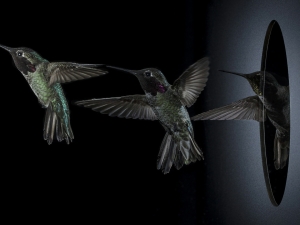
Hummingbirds’ Unique Sideways Flutter Gets Them Through Small Apertures
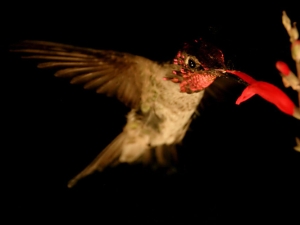
Do Hummingbirds Drink Alcohol? More Often Than You Think.
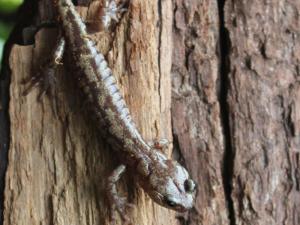
Skydiving Salamanders Live in World’s Tallest Trees
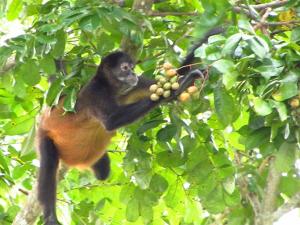
Monkeys Often Eat Fruit Containing Alcohol, Shedding Light on Our Taste for Booze

Biologists Discover Skydiving Spiders in South American Forests
Arachnophobes fearful of spiders jumping, creeping or falling into their beds now have something new to worry about. Some spiders might also glide in through the window.

Drunken Monkeys: What Animals Tell Us About Our Thirst for Booze
Robert Dudley, an evolutionary physiologist and professor of integrative biology, discusses his new book, “The Drunken Monkey, Why we drink and abuse alcohol” (UC Press 2014). Dudley talks about his motivations for writing the book, the evidence that our attraction to alcohol is an evolutionary adaptation, and what this means for efforts to prevent alcohol abuse.
How Hummingbirds Shake off the Rain
Ever wonder how birds are able to fly in the rain? Robert Dudley and Victor Ortega-Jimenez showed that hummingbirds shake their heads with 34 g’s of force, much like a dog flings off water. But hummingbirds do this in flight in the heaviest downpour without losing control.
Featured in the Media
Teaching
Special Study in Integrative Biology [INTEGBI 298 - 130]
Graduate Research [INTEGBI 299 - 130]
Comparative Animal Physiology [INTEGBI 148 - 001]
Special Study in Integrative Biology [INTEGBI 298 - 150]
Graduate Research [INTEGBI 299 - 150]
Supervised Research: Biological Sciences [UGIS 192C - 017]
Comparative and Human Biomechanics [INTEGBI 135 - 001]
Special Study in Integrative Biology [INTEGBI 298 - 130]
Graduate Research [INTEGBI 299 - 130]
Supervised Research: Biological Sciences [UGIS 192C - 016]