Research Bio
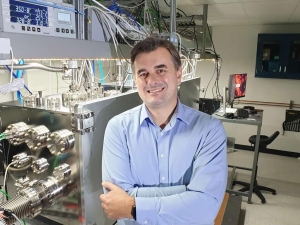
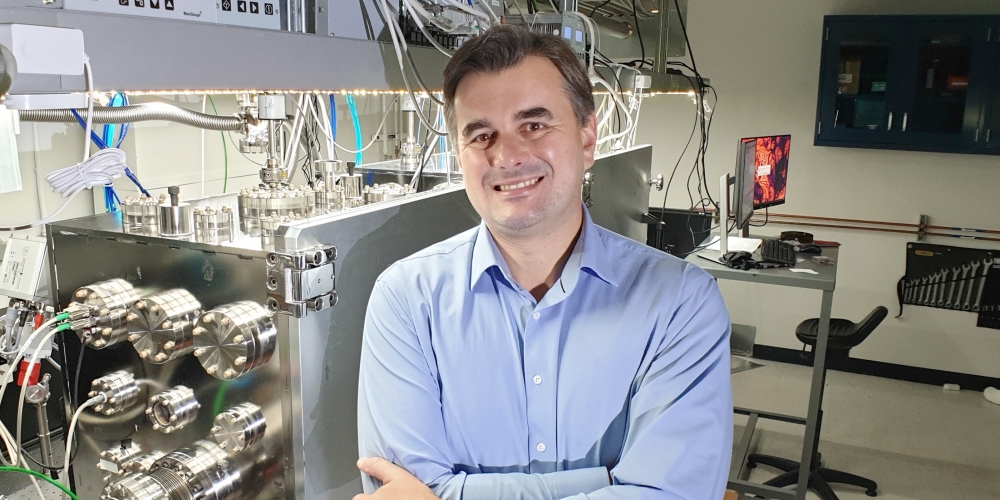
Michael Zuerch is an assistant professor in the Department of Chemistry. He and his team experimentally explore structural, carrier and spin dynamics in novel quantum materials, heterostructures and on surfaces and at interfaces to answer current questions in materials science and physical chemistry. In his research he pursues a multidisciplinary research program that combines the exquisite possibilities that ultrafast X-ray spectroscopy and nanoimaging offers and closely interface with material synthesis and theory groups. He employs state-of-the-art methods and develops novel nonlinear X-ray spectroscopies in the lab and at large-scale facilities. In his research he is specifically interested in experimentally studying and controlling material properties on time scales down to the sub-femtosecond regime and on nanometer length scales to tackle challenging problems in quantum electronics, information storage and solar energy conversion.
Research Expertise and Interest
collective phenomena in material, chemical material dynamics in surfaces and interfaces, symmetry-broken states and their emergence in condensed-phase systems, dynamical properties in artificial and correlated superlattices, ultrafast spectroscopy from THz to X-rays