Alanna Schepartz

Research Bio

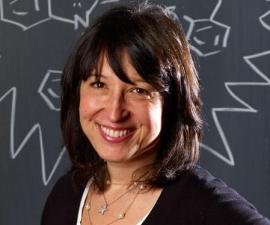
Alanna Schepartz is a Professor of Chemistry; the T.Z. and Irmgard Chu Distinguished Chair in Chemistry; Professor of Molecular and Cell Biology; and a Faculty Affiliate, California Institute for Quantitative Biosciences (QB3).  

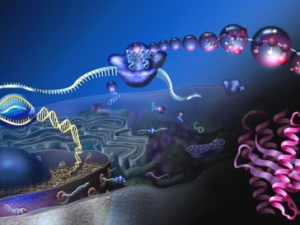
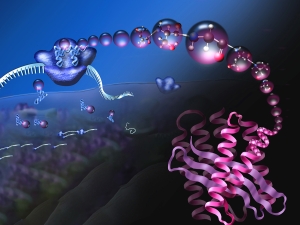
Professor Schepartz's research group is interested in questions that span the chemistry-biology continuum. We seek to establish new knowledge about the chemistry of complex cellular processes and apply this knowledge to design or discover molecules–both small and large–with unique or useful properties. We apply the tools of organic synthesis, biochemistry, biophysics, and structural, molecular, and synthetic biology in our work. Current projects focus on (1) repurposing the ribosome to biosynthesize sequence-defined chemical polymers and polyketides; (2) exploring and improving novel tools for trafficking proteins to the cytosol and nucleus for therapeutic applications; (3) understanding the mechanism by which chemical information is transported through cellular membranes; and (4) developing new probes and fluorophores to image organelle dynamics at super-resolution for highly extended times and in multiple colors.

Research Expertise and Interest

chemical biology, synthetic biology, organic chemistry, biophysics
In the News

Berkeley awarded $20M to establish an NSF Center for Chemical Innovation

A team of institutions led by UC Berkeley has been awarded a $20 million research grant from the National Science Foundation to pursue breakthrough technologies towards new medicines and innovative materials. The effort brings together a team of chemists, biologists, engineers, and data scientists to tackle a “Holy Grail” problem in the chemical sciences: how to synthesize truly sequence-defined chemical polymers, oligomeric molecules possessing both a pre-determined, diverse sequence, and a defined length. 

Featured in the Media

Please note: The views and opinions expressed in these articles are those of the authors and do not necessarily reflect the official policy or positions of UC Berkeley.
January 9, 2020
Linda Wang
Chemical engineering professor Enrique Iglesia, chemistry and molecular and cell biology professor Alanna Schepartz, chemistry professor Kevan Shokat, and postdoctoral chemistry scholar Anna Wuttig are among this year's American Chemical Society National Award winners. The honor recognizes contributions of major significance to the chemistry field. Professor Iglesia is cited for "outstanding contributions to chemistry and engineering concepts with broad impact on the practice of catalytic transformations." Professor Schepartz is cited for "pioneering and creative development and application of alpha- and beta-peptides to explore and expand the chemistry in biology." Professor Shokat is cited for the "development of chemical tools and drug candidates that precisely regulate individual kinases and GTPases to re-wire signaling pathways in cancer." And Anna Wuttig is cited for "contributions to energy conversion chemistry by developing comprehensive mechanistic models for the catalytic conversion of carbon dioxide to chemical fuels driven by renewable electricity."

Teaching

Courses taught during the three most recent terms
2026 Spring
  • Special Laboratory Study  [CHEM 196]  

  • Seminars for Graduate Students  [CHEM 298]  

  • Research for Graduate Students  [CHEM 299]  

  • Professional Preparation: Supervised Teaching of Chemistry  [CHEM 300]  

  • Chemical Biology I - Structure, Synthesis and Function of Biomolecules  [CHEM C271A]  

  • Chemical Biology II - Enzyme Reaction Mechanisms  [CHEM C271B]  

  • Chemical Biology III - Contemporary Topics in Chemical Biology  [CHEM C271C]  

  • Senior Honors Thesis  [CHEM H193]  

  • Research for Advanced Undergraduates  [CHEM H194]  

  • Supervised Independent Study and Research  [MCELLBI 199]  

  • Research Review in Understanding and Exploiting Complex Biological Processes and Machines  [MCELLBI 229J]  

  • Research  [MCELLBI 292]  

  • Supervised Independent Study  [MCELLBI 99]  

  • Chemical Biology I - Structure, Synthesis and Function of Biomolecules  [MCELLBI C212A]  

  • Chemical Biology II - Enzyme Reaction Mechanisms  [MCELLBI C212B]  

  • Chemical Biology III - Contemporary Topics in Chemical Biology  [MCELLBI C212C]  

  • Honors Research  [MCELLBI H196A]  

  • Honors Research  [MCELLBI H196B]  

2025 Fall
  • Organic Chemistry--Advanced Laboratory Methods  [CHEM 115]  

  • Special Laboratory Study  [CHEM 196]  

  • Seminars for Graduate Students  [CHEM 298]  

  • Research for Graduate Students  [CHEM 299]  

  • Professional Preparation: Supervised Teaching of Chemistry  [CHEM 300]  

  • Research for Advanced Undergraduates  [CHEM H194]  

  • Supervised Independent Study and Research  [MCELLBI 199]  

  • Research Review in Understanding and Exploiting Complex Biological Processes and Machines  [MCELLBI 229J]  

  • Research  [MCELLBI 292]  

  • Supervised Independent Study  [MCELLBI 99]  

  • Honors Research  [MCELLBI H196A]  

2025 Summer
  • Supervised Independent Study and Research  [CHEM 199]  

  • Research for Graduate Students  [CHEM N299]  

2025 Spring
  • Organic Chemistry--Advanced Laboratory Methods  [CHEM 115]  

  • Special Laboratory Study  [CHEM 196]  

  • Seminars for Graduate Students  [CHEM 298]  

  • Research for Graduate Students  [CHEM 299]  

  • Professional Preparation: Supervised Teaching of Chemistry  [CHEM 300]  

  • Senior Honors Thesis  [CHEM H193]  

  • Research for Advanced Undergraduates  [CHEM H194]  

  • Supervised Independent Study and Research  [MCELLBI 199]  

  • Research Review in Understanding and Exploiting Complex Biological Processes and Machines  [MCELLBI 229J]  

  • Research  [MCELLBI 292]  

  • Supervised Independent Study  [MCELLBI 99]  

  • Honors Research  [MCELLBI H196A]  

  • Honors Research  [MCELLBI H196B]