NSF launches new cyberinfrastructure project to succeed TeraGrid

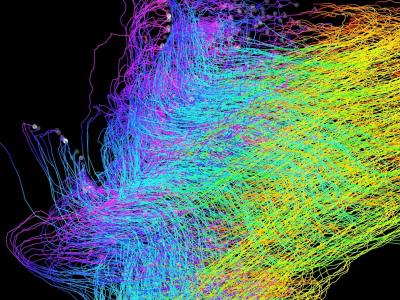
The NSF has launched a massive five-year, $121 million project involving 17 institutions, including UC Berkeley, to bring advanced digital services to the nation’s scientists and engineers. Collectively known as the Extreme Science and Engineering Discovery Environment (XSEDE), the new project replaces the TeraGrid, which for 10 years provided researchers with computational and data resources in an open infrastructure to support scientific discovery.

Magnetic memory and logic could achieve ultimate energy efficiency

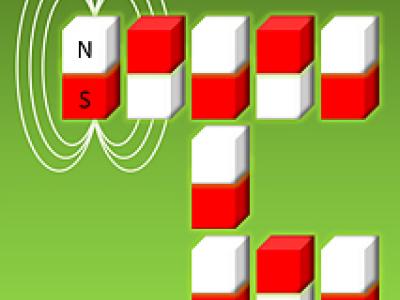
Information theory dictates that a logical operation in a computer must consume a minimum amount of energy. Today’s computers consume a million times more energy per operation than this limit, but magnetic computers with no moving electrons could theoretically operate at the minimum energy, called the Landauer limit, according to UC Berkeley electrical engineers.

New Intel lab will focus on secure computing

Intel Labs announced a second Intel Science and Technology Center to open at UC Berkeley with a focus on secure computing. Funded by $15 million over five years, the new center will encourage tighter collaboration between university thought leaders and Intel.

Radical new Intel transistor based on UC Berkeley’s FinFET

In early May, Intel announced a radical new transistor design: a 3D device that will enable the production of integrated-circuit chips that operate faster with less power. The breakthrough has its roots in research begun in 1997 by a team led by Berkeley electrical engineers Chenming Hu, Jeff Bokor and Tsu-Jae King Liu.

Graphene optical modulators could lead to ultrafast communications

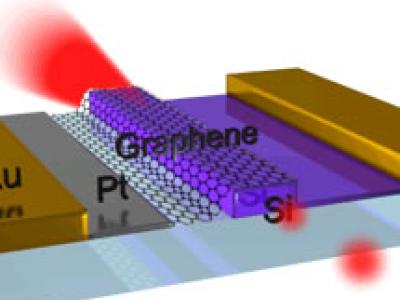
UC Berkeley researchers have shown that graphene, a one-atom-thick layer of crystallized carbon, can be tuned electrically to modify the amount of photons absorbed. This ability to switch light on and off is the fundamental characteristic of a network modulator, opening the door to optical computing in handheld electronics.

UC Berkeley, UCSF join forces to advance frontier of brain repair

Researchers at UC Berkeley and UCSF have launched the joint Center for Neural Engineering and Prostheses to develop technology that can translate brain signals into movements controlling prosthetic limbs, circumventing damaged or missing neural circuits in people suffering from disabling conditions.

Einstein@Home's pulsar discovery proves value of volunteer computing

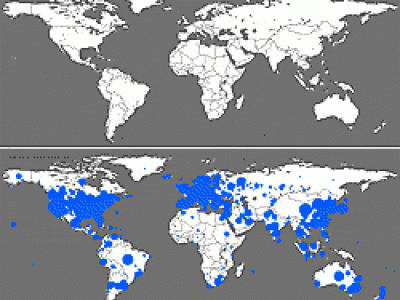
One of the world's most popular volunteer computing projects, Einstein@Home, has discovered an unusual pulsar from data captured by the giant radio dish in Arecibo, Puerto Rico. The project, built on UC Berkeley's BOINC platform, demonstrates the scientific value of volunteer computing.

NSF awards $24.5 million for center to stem increase of electronics power draw

The NSF has awarded $24.5 million to UC Berkeley researchers to head an ambitious, multi-institutional center that could one day lead to a million-fold reduction in power consumption by electronics. The researchers said such a dramatic increase in energy efficiency could allow the digital revolution to continue well beyond the limits that would otherwise be imposed by its growing demand for energy.

RAD Lab wins backing from five major IT firms

The UC Berkeley announced a new influx of industry support for its Reliable, Adaptive and Distributed systems laboratory, or RAD Lab, which will be dedicated to creating the next generation of Internet design tools.