
Research Bio
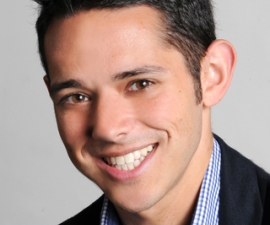
Scott Moura is a controls engineer by training whose research focuses on control systems, batteries, and sustainable transportation. He develops models and algorithms for battery management systems that improve performance, lifespan, and safety in electric vehicles and grid storage. Moura’s work integrates control theory, electrochemistry, and data science to optimize energy storage across multiple scales. His research supports the transition to clean energy and electrified mobility.
He is Professor of Civil and Environmental Engineering and Director of the Energy, Controls, and Applications Lab at UC Berkeley. He is also the Acting Director for the Berkeley Institute of Transportation Studies. A recipient of the NSF CAREER Award, he mentors students in control systems, battery engineering, and energy management.
Research Expertise and Interest
control systems, optimization, data science, batteries, electric vehicles, energy systems
In the News

Using AI to Get People out of Their Cars and Into HOVs

UC Berkeley Leads New Assessment of Bay Area Climate Impacts
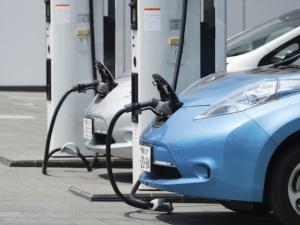
Goodbye, Range Anxiety? Electric Vehicles May Be More Useful Than Previously Thought
In the first study of its kind, scientists at the Department of Energy’s Lawrence Berkeley National Laboratory (Berkeley Lab) quantitatively show that electric vehicles (EVs) will meet the daily travel needs of drivers longer than commonly assumed.
Teaching
Design of Internet-of-Things for Smart Cities [CIVENG 186 - 001]
Group Studies, Seminars, or Group Research [CIVENG 298 - 006]
Individual Research [CIVENG 299 - 042]
Supervised Independent Study and Research [CIVENG 99 - 001]
Undergraduate Research [ENGIN 194 - 003]
Energy Engineering Seminar [ENGIN 93 - 001]
Individual Research [CIVENG 299 - 016]
Undergraduate Research [ENGIN 194 - 001]
Design of Internet-of-Things for Smart Cities [CIVENG 186 - 001]
Supervised Independent Study [CIVENG 199 - 004]
Individual Research [CIVENG 299 - 037]
Undergraduate Research [ENGIN 194 - 002]
Group Studies, Seminars, or Group Research [CIVENG 298 - 006]
Individual Research [CIVENG 299 - 042]
Undergraduate Research [ENGIN 194 - 003]
Energy Engineering Seminar [ENGIN 93 - 001]