

Research Bio
Frederic Theunissen is a professor in the Department of Neuroscience and the Department of Integrative Biology. Theunissen's research includes:
Auditory physiology - Using songbirds as a model system, Frederic Theunissen's laboratory is researching the neural representation of behaviorally relevant natural sounds at various levels of the ascending auditory system. They have previously described how the auditory cortex acts as a modulation filter bank. They are now studying the neural computations that allow us to categorize sounds into meaningful groups. They are also studying the development of the auditory system and the interaction of the auditory system with the vocal system. In collaboration with other groups, they perform similar investigations using human neuro-physiological data.
Theoretical Neuroscience in Audition - The goal of this line of research is to derive computational schemes for sound processing that would be beneficial for biological organisms faced with the identification of behaviorally relevant sounds or sound features presented in a background of environmental noise. They then study the link between these optimal computational schemes and major perceptual dimensions in audition. These theoretical predictions are tested against our physiological data.
Computational Neuroscience - Theunissen's laboratory is currently developing analytical and numerical algorithms in applied systems analysis and information theory. They use these tools to estimate the response propreties, the reliability and the redundancy of high-level sensory neurons.
Auditory and Vocal Behavior - Theunissen's laboratory is also interested in vocal communication behavior in humans and animals. This works combines bioacoustical analyses with experiments in animal behavior or human psychophysics. At a proximal level, they are interested in understanding the link between neural representations for communication sounds (or music) to the behavioral auditory discrimination for the same stimuli. At an ultimate level, they design experiments to gain insights on the evolution of communication calls in terms of their signaling characteristics, their volutional control and adaptations that have lead to vocal plasticity and imitation.
Research Expertise and Interest
behavior, cognition, brain, psychology, birdsong, vocal learning, audition, neurophysiology, speech perception, computational neuroscience, theoretical neuroscience
In the News

Eleven UC Berkeley Faculty Members Elected Fellows

Finch Chirps Are More Than Mindless Chatter

Zebra Finches Amazing at Unmasking the Bird Behind the Song

Pop-Outs: How the Brain Extracts Meaning From Noise
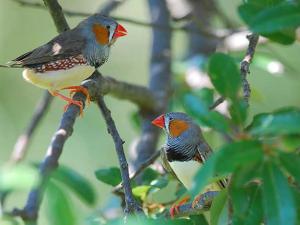
How Songbirds May Help Build a Better Hearing Aid
UC Berkeley psychologist Fred Theunissen's work on songbirds could help improve hearing aids to allow people to home in on specific sounds in noisy environments, a particular problem for the hard of hearing.

Giggles Give Clues to Hyena's Social Status
The giggle call of the spotted hyena tells other hyenas not only the age and identity of the animal, but also its social status, according to a new UC Berkeley study.
Teaching
Cognitive and Computational Lab [NEU 172L - 001]
Neuroscience Graduate Research [NEU 292 - 027]
Neuroscience Research Review [NEU 295 - 027]
Neuroscience Career Skills [NEU 210B - 001]
Neuroscience Introduction to Research [NEU 291B - 001]
Neuroscience Graduate Student Presentation Seminar [NEU 294 - 001]
Neuroscience Research Review [NEU 295 - 027]
Neuroethology: Complex Animal Behaviors and Brains [PSYCH C115C - 001]
Supervised Research: Biological Sciences [UGIS 192C - 073]
Cognitive and Computational Lab [NEU 172L - 001]
Neuroscience Research Design and Analysis [NEU 210A - 001]
Neuroscience Introduction to Research [NEU 291A - 001]
Neuroscience Graduate Research [NEU 292 - 028]
Neuroscience Research Review [NEU 295 - 027]
Supervised Research: Biological Sciences [UGIS 192C - 070]