
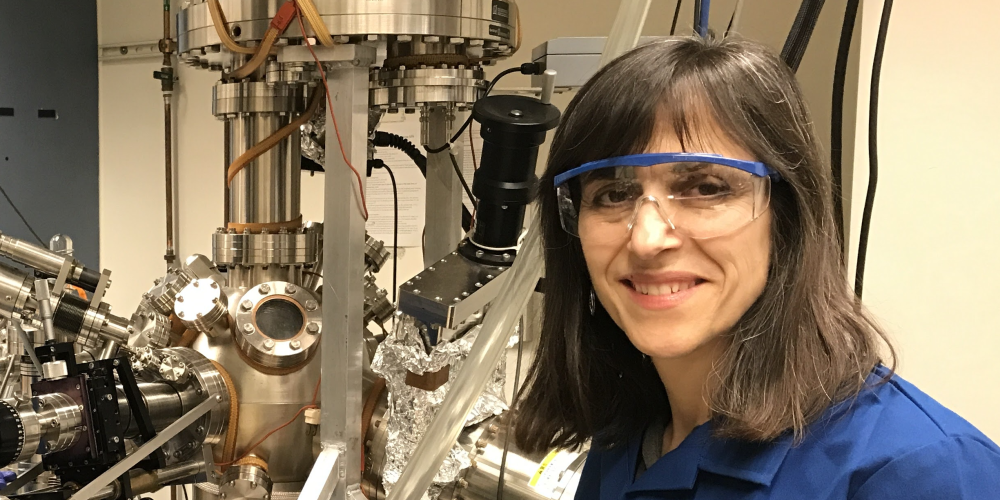
Roya Maboudian

Research Bio

Roya Maboudian is Distinguished Professor of Chemical and Biomolecular Engineering, and Co-Director of the Berkeley Sensor & Actuator Center (BSAC) at the University of California, Berkeley. She also holds The John F. Heil, Jr. Chancellor's Chair in Chemical & Biomolecular Engineering, and is the Associate Dean of Undergraduate Affairs in the College of Chemistry at UC Berkeley. Her research interest is in the surface and materials science and engineering of micro/nanosystems, with applications in health and environmental monitoring, harsh-environment sensing, biomematics, energy technologies and sustainability. She is the recipient of several awards, including the Presidential Early Career Award for Scientists and Engineers (PECASE) from the White House, NSF Young Investigator award, and the Beckman Young Investigator award. She is a Fellow of the American Vacuum Society (AVS), a fellow of the Institute of Electrical and Electronics Engineers (IEEE), and a Bakar Fellow. She has served as editor to the American Chemical Society (ACS) Sensors and the IEEE Journal of Microelectromechanical Systems (JMEMS), and as associate editor to IEEE/SPIE Journal on Micro/Nanolithography, MEMS and MOEMS (JM3).

Research Expertise and Interest

surface and interfacial science and engineering, nanotechnology, harsh-environment sensors, silicon carbide, green construction, biologically-inspired materials synthesis

In the News

Miniature Sensors Can Detect Potential Dangers of CO2

CO2 concentration in fresh air is about 400 parts per million (ppm). But get a group of people packed in a closed indoor space, and CO2 concentration can rise quickly.  Recent studies suggest that as levels increase above 1,000 ppm, decision-making and other cognitive abilities decline. Roya Maboudian studies the properties of nano-materials, including how their surfaces affect their performance. As a 2019-2020 Bakar Fellow, she is developing small, inexpensive and sensitive CO2 sensors.

Seven new Bakar Fellows already are making an impact

Seven University of California, Berkeley, faculty scientists with novel ideas and an entrepreneurial spirit have been named to the 2019-20 cohort of Bakar Fellows, an honor that gives the fellows the money and time to translate their laboratory breakthroughs into technologies ready for the marketplace.

Teaching

Courses taught during the three most recent terms
2026 Spring
  • Individual Study or Research  [AST 299]  

  • Special Laboratory Study  [CHEM 196]  

  • Field Study in Chemistry  [CHEM 197]  

  • Supervised Independent Study and Research  [CHEM 199]  

  • Directed Group Study  [CHEM 98W]  

  • Directed Group Study  [CHEM 98W]  

  • Directed Group Study  [CHEM 98W]  

  • Senior Honors Thesis  [CHEM H193]  

  • Research for Advanced Undergraduates  [CHEM H194]  

  • Special Laboratory Study  [CHMENG 196]  

  • Field Study in Chemical Engineering  [CHMENG 197]  

  • Supervised Independent Study and Research  [CHMENG 199]  

  • Seminar in Chemical Engineering  [CHMENG 298]  

  • Research in Chemical Engineering  [CHMENG 299]  

  • Professional Preparation: Supervised Teaching of Chemical Engineering  [CHMENG 300]  

  • Individual Studies for Graduate Students  [CHMENG 602]  

  • Directed Group Study  [CHMENG 98W]  

  • Senior Honors Thesis  [CHMENG H193]  

  • Research for Advanced Undergraduates  [CHMENG H194]  

2025 Fall
  • Individual Study or Research  [AST 299]  

  • Special Laboratory Study  [CHEM 196]  

  • Field Study in Chemistry  [CHEM 197]  

  • Supervised Independent Study and Research  [CHEM 199]  

  • Directed Group Study  [CHEM 98W]  

  • Directed Group Study  [CHEM 98W]  

  • Directed Group Study  [CHEM 98W]  

  • Senior Honors Thesis  [CHEM H193]  

  • Research for Advanced Undergraduates  [CHEM H194]  

  • Process Technology of Solid-State Materials Devices  [CHMENG 179]  

  • Special Laboratory Study  [CHMENG 196]  

  • Special Laboratory Study  [CHMENG 196]  

  • Field Study in Chemical Engineering  [CHMENG 197]  

  • Supervised Independent Study and Research  [CHMENG 199]  

  • Seminar in Chemical Engineering  [CHMENG 298]  

  • Research in Chemical Engineering  [CHMENG 299]  

  • Professional Preparation: Supervised Teaching of Chemical Engineering  [CHMENG 300]  

  • Individual Studies for Graduate Students  [CHMENG 602]  

  • Directed Group Study  [CHMENG 98W]  

  • Senior Honors Thesis  [CHMENG H193]  

  • Research for Advanced Undergraduates  [CHMENG H194]  

  • Research for Advanced Undergraduates  [CHMENG H194]  

2025 Summer
  • Special Laboratory Study  [CHEM 196]  

  • Special Laboratory Study  [CHEM 196]  

  • Field Study in Chemistry  [CHEM 197]  

  • Research for Advanced Undergraduates  [CHEM H194]  

  • Research for Advanced Undergraduates  [CHEM H194]  

  • Special Laboratory Study  [CHMENG 196]  

  • Field Study in Chemical Engineering  [CHMENG 197]  

  • Research for Advanced Undergraduates  [CHMENG H194]  

2025 Spring
  • Individual Study or Research  [AST 299]  

  • Special Laboratory Study  [CHEM 196]  

  • Special Laboratory Study  [CHEM 196]  

  • Field Study in Chemistry  [CHEM 197]  

  • Supervised Independent Study and Research  [CHEM 199]  

  • Directed Group Study  [CHEM 98W]  

  • Directed Group Study  [CHEM 98W]  

  • Directed Group Study  [CHEM 98W]  

  • Senior Honors Thesis  [CHEM H193]  

  • Research for Advanced Undergraduates  [CHEM H194]  

  • Special Laboratory Study  [CHMENG 196]  

  • Field Study in Chemical Engineering  [CHMENG 197]  

  • Supervised Independent Study and Research  [CHMENG 199]  

  • Seminar in Chemical Engineering  [CHMENG 298]  

  • Research in Chemical Engineering  [CHMENG 299]  

  • Professional Preparation: Supervised Teaching of Chemical Engineering  [CHMENG 300]  

  • Individual Studies for Graduate Students  [CHMENG 602]  

  • Senior Honors Thesis  [CHMENG H193]  

  • Research for Advanced Undergraduates  [CHMENG H194]  

  • Research for Advanced Undergraduates  [CHMENG H194]