

Research Bio
Timothy R. Tangherlini is the Elizabeth H. and Eugene A. Shurtleff Chair in Undergraduate Education. He is a Professor in the Dept. of Scandinavian and in the School of Information. A folklorist and ethnographer by training, he is the author of Danish Folktales, Legends and Other Stories (2014), Talking Trauma (1999), and Interpreting Legend (1994). He has also published widely in academic journals, including The Journal of American Folklore, Western Folklore, Journal of Folklore Research, Folklore, Scandinavian Studies, Danske Studier, PlosOne, Computer and Communications of the Association for Computing Machines. He iwasa co-PI on an international team developing ISEBEL: Intelligent Search Engine for Belief Legends, as well as an international lead on the Norwegian SAMLA project, which digitized the historical ethnographic collections of Norway. He is interested in the circulation of stories on and across social networks, and the ways in which stories are used by individuals in their ongoing negotiation of ideology with the groups to which they belong. In general, his work focuses on computational approaches to problems in the study of folklore, literature and culture.
He has been deeply involved in the development of the field of Culture Analytics, co-directing a three-year long program at the NSF's Institute for Pure and Applied Mathematics. He also led the NEH's Institute for Advanced Topics in Digital Humanities on Network Analysis for the Humanities. In collaboration with colleagues at UCLA and Rutgers, he has worked on automated methods for the detection of conspiracy theories from large social media corpora. Along with a colleague at Stanford, he is developing a search engine for dance movement in K-Pop using deep learning methods. In other work, he is exploring aspects of the rise of the Danish cooperative movement in 19th century Denmark, which aligns with his role in a recently launched center for excellence at the University of Copenhagen, Changing Urban and Rural Lives (TRANSITION). A five year project funded by the AFOSR and led by colleagues at Indiana University, aims to understand the dynamics of narrative and the resonance of narratives with individual's beliefs.
He is a Fellow of the American Folklore Society and the Royal Gustav Adolf Academy (one of Sweden’s Royal Academies). A producer of three independent documentary films, he has also consulted on films for Disney Animation, National Geographic Television, National Geographic Specials and PBS. His research has been funded by the NEH, the NSF, the NIH, AFOSR, the Mellon Foundation, the Nordic Council of Ministers, the Korea Foundation, the American Scandinavian Foundation, the John Simon Guggenheim Memorial Foundation, the American Council of Learned Societies, and Google.
Prior to joining the Cal faculty, he was a Professor in the Dept. of Asian Languages and Cultures, and the Scandinavian Section at UCLA. He has held appointments at the Univ. of Copenhagen (Denmark), the Univ. of Iceland, Harvard University, the Univ. of Tartu (Estonia), and the Univ. of Gothenburg (Sweden).
Research Expertise and Interest
folklore, danish culture, danish cinema, danish literature, 19th and 20th century scandinavian literature, digital humanities, culture analysis, machine learning, networks, korean culture, public impact research/scholarship, community-engaged research / scholarship
In the News

Berserkers to Bigfoot: Computational Folklore Explained in 101 Seconds
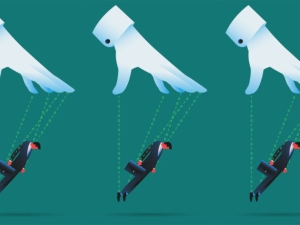
Why Conspiracies Are so Popular — and What We Can Do to Stop Them
Disinformation Is Breaking Democracy. Berkeley Is Exploring Solutions.
Teaching
Doctoral Colloquium [INFO 295 - 001]
Scandinavian Folklore [SCANDIN 165 - 001]
Graduate Studies [SCANDIN 249 - 007]
Special Study [SCANDIN 298 - 002]
Dissertation Writing [SCANDIN 299 - 002]
Cultural Analytics: Theories and Methods [INFO 230 - 001]
Teaching Practicum [SCANDIN 300B - 002]
Scandinavian Teaching Methods [SCANDIN 301 - 002]
Individual Study for M.A. Candidates [SCANDIN 601 - 006]
Individual Study for Doctoral Candidates [SCANDIN 602 - 004]
Supervised Research: Humanities [UGIS 192A - 025]
The Works of Hans Christian Andersen [SCANDIN 106 - 001]
Scandinavian Folklore [SCANDIN 165 - 001]
Graduate Studies [SCANDIN 249 - 007]
Special Study [SCANDIN 298 - 002]
Dissertation Writing [SCANDIN 299 - 002]
Teaching Practicum [SCANDIN 300B - 002]
Scandinavian Teaching Methods [SCANDIN 301 - 002]
Supervised Research: Humanities [UGIS 192A - 018]