
Research Bio
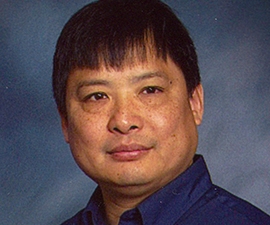
Shaofan Li is a research scientist in the field of engineering science whose current research focuses on developing artificial intelligence technologies to solve scientific and engineering problems, including artificial intelligence-based inverse solution for industrial problems, artificial intelligence-aided design (AIAD) of structures and materials, data-driven computational mechanics, and machine learning-powered multiscale modeling and simulations. He is best known for developing various theoretical and numerical methods for simulating fracture, damage, and failure in materials and structures, and developing AIAD methods for engineering structural design. His work integrates finite element analysis, mesh-free methods, high-performance computing, and theoretical mechanics to address problems ranging from material and structural responses under extreme loads to developing novel composite structures for earthquake engineering and studying the influence of human cough dynamics on COVID-19 virus pathogen transmission, among many others. Li's models are widely used to predict how materials and structures behave under extreme loads.
Dr. Li is a Professor of Civil and Environmental Engineering at UC Berkeley, a fellow of the International Association of Computational Mechanics (IACM), and a member of the National Academy of Artificial Intelligence (NAAI). His research has been published in top journals, including Science Advances, IEEE Transactions on Pattern Analysis and Machine Intelligence, Journal of the Mechanics and Physics of Solids, Computer Methods in Applied Mechanics and Engineering, Journal of Fluid Mechanics, Cement and Concrete Research, among many others. Li has also led collaborations with national laboratories to improve resilience and sustainability in infrastructure systems. His expertise spans computational mechanics, nano- and micromechanics, soft matter mechanics, and structural engineering.
Research Expertise and Interest
applications of artificial intelligence and machine learning in engineering and sciences, structural mechanics, computational mechanics, computational materials, computational mechanics and computational physics, finite element methods and meshfree particle methods, ferroelectric and piezoelectric materials, atomistic simulation and multiscale simulations, nonlinear continuum mechanics, soft matter mechanics, wave propagations, modeling and simulation of fracture, dislocations, modeling and simulation of material failures, nano-mechanics, bio-mechanics and bio-physics, cellular mechanics, micromechanics & composite materials, mechanics and physics of amorphous materials
Teaching
Individual Research [CIVENG 299 - 036]
Structure and Properties of Civil Engineering Materials [CIVENG 60 - 001]
Individual Research [CIVENG 299 - 007]
Group Studies, Seminars, or Group Research [CIVENG 298 - 002]
Individual Research [CIVENG 299 - 032]
Micromechanics [CIVENG C236 - 001]
Introduction to Solid Mechanics [CIVENG C30 - 002]
Micromechanics [MATSCI C214 - 001]
Introduction to Solid Mechanics [MECENG C85 - 02]
Individual Research [CIVENG 299 - 036]
Structure and Properties of Civil Engineering Materials [CIVENG 60 - 001]