
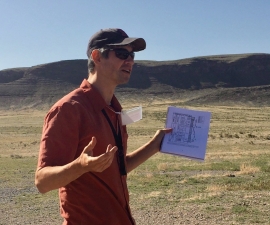
Research Bio
Seth Finnegan is an associate professor in the Department of Integrative Biology. He is broadly interested in the processes that have shaped the composition of the marine biota and the development of marine ecosystems from the origin of animals in the late Neoproterozoic to the present day. Research in his lab integrates data from a variety of sources including field observations, lab work, and literature databases to ask and answer questions about the nature of organism-environment interactions through time.
Research Expertise and Interest
paleobiology, paleoecology, paleoenvironments, mass extinctions, marine ecosystems
In the News
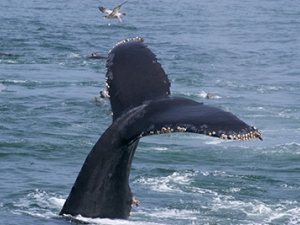
Fossil barnacles, the original GPS, help track ancient whale migrations
Barnacles that hitch rides on the backs of humpback and gray whales not only record details about the whales’ yearly travels, they also retain this information after they become fossilized, helping scientists reconstruct the migrations of whale populations millions of years in the past, according to a new University of California, Berkeley, study.
Featured in the Media
Please note: The views and opinions expressed in these articles are those of the authors and do not necessarily reflect the official policy or positions of UC Berkeley.
March 26, 2019
Chemical evidence in fossilized barnacles indicates that whales' migration routes have remained the same for hundreds of millennia, finds a new study led by doctoral marine paleobiology student Larry Taylor. Examining the unique isotope signatures left in modern and fossilized barnacle shells, which reveal the bodies of water crustaceans passed through, allowed the team -- including associate integrative biology professor Seth Finnegan and colleagues from the Smithsonian Tropical Research Institute in Panama and Pennsylvania State University -- to reconstruct the migration routes of the whales that carried them. "The signals we found in the fossil barnacles showed us quite clearly that ancient humpback and grey whales were undertaking journeys very similar to those that these whales make today," Taylor says. "It seems like the summer-breeding and winter-feeding migrations have been an integral part of the way of life of these whales for hundreds of thousands of years." For more on this, see our press release at Berkeley News. Stories on this topic have appeared in dozens of sources around the world, including The Independent (UK), Tech Times, and IFL Science.
Loading Class list ...