
Research Bio
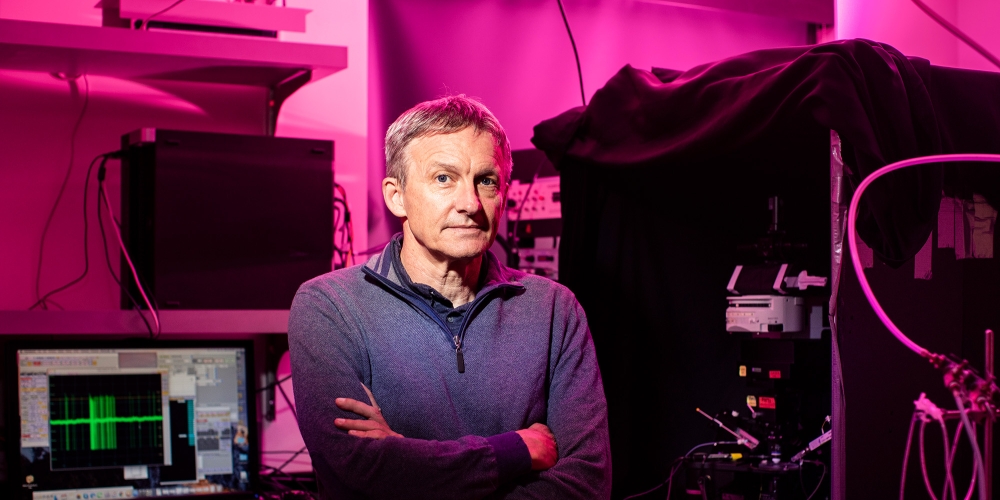
Rowland Taylor is a visual neuroscientist and Professor of Optometry and Vision Science at UC Berkeley. His research seeks to understand how the retina's complex neural circuits convert the visual image at the back of the eye into neural signals sent to the brain.
He is best known for his work unraveling the neural mechanisms that allow the retina to detect complex image features, such as motion direction and the orientation of edges. This feature extraction is critically dependent on inhibitory neural activity, a relatively poorly understood process that Professor Taylor’s team is currently working to decipher.
By studying these neural signaling pathways in both healthy and diseased retinas, his team's ultimate goal is to aid in the development of new treatments to restore sight. Currently, the lab is investigating the potential of using novel engineered channelrhodopsin variants to restore vision lost to retinal degeneration. A second project seeks to determine how the retinal circuitry detects and signals when the image is blurred, aiming to better understand the causes of myopia (nearsightedness) and find new ways to slow or halt its progression.
Research Expertise and Interest
mammalian visual system, retinal function