

Research Bio
Nitash P. Balsara' is a professor of Chemical Engineering. He received his Ph.D. in Chemical Engineering from Rensselaer Polytechnic Institute in 1988.
The lithium-ion battery is a remarkable device. It is the first time humanity has access to a reusable box for storing and using energy. We work on the development of polymer electrolytes that enable the rapid transport of lithium ions between the battery electrodes. Our work encompasses materials design, synthesis, characterization, and performance evaluation in applications. We have developed microphase separated block copolymer electrolytes wherein one of the microphases is soft and ion-conducting, while the other is a rigid insulator. This design enables independent control over the electrical and mechanical properties of the electrolyte. We combine electrochemical characterization with advanced characterization methods such as synchrotron hard X-ray microtomography, X-ray photon correlation spectroscopy, and atomic-scale cryogenic electron microscopy to determine the molecular underpinnings of our observations. While we mainly focus on fundamental studies that are published in peer-reviewed journals, we also publish patents when we perceive that our work may have direct societal impact. Based on our patents, group alumni have cofounded two battery start-up companies: Seeo (founded in 2007) and Blue Current (founded in 2014).
Research Expertise and Interest
electrochemical energy conversion, polymer properties, small angle scattering, nanoscale and microscale sciences
In the News

Four UC Berkeley Faculty Elected to National Academy of Engineering

Authors John Newman and Nitash Balsara Release 'Electrochemical Systems', Fourth Edition
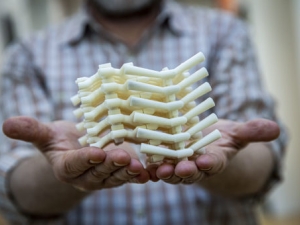
Freeze Frame: Scientists Capture Atomic-Scale Snapshots of Artificial Proteins
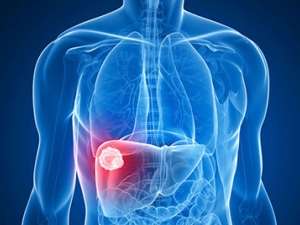
Drug Sponge Could Minimize Side Effects of Cancer Treatment
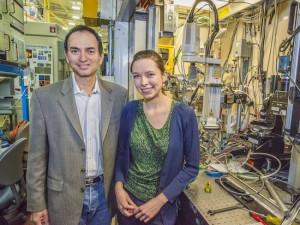
Berkeley Lab Researchers Find Dendrites Start Below the Surface
The lithium-ion batteries that power our laptops, smartphones and electric vehicles could have significantly higher energy density if their graphite anodes were to be replaced by lithium metal anodes
Teaching
Seminars for Graduate Students [CHEM 298 - 014]
Polymer Science and Technology [CHMENG C178 - 001]
Seminars for Graduate Students [CHEM 298 - 014]
Polymer Science and Technology [CHMENG C178 - 001]