
Research Bio
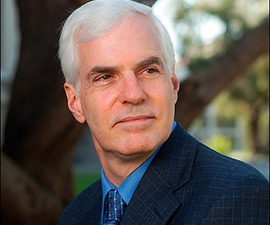
Michael Ranney's research explores the nature of explanation and understanding, in both formal and informal domains. His work is intended to foster the incorporation of challenging information (e.g., on global climate change). Regarding explanatory coherence, he, his students and his collaborators study and model the nature and utility of reasoning involving both supportive and contradictory relations. They also generate curricula, methods, and artificially intelligent software designed to improve rational thinking. Ranney's work on the representation and reorganization of scientific and societal knowledge exhibits the fragmentary nature of most lay people's knowledge--in arenas as diverse as physics, biology, abortion, and immigration. His latest projects study reasoning and policy-making involving socially important rates and statistics. He was a Spencer Fellow of the National Academy of Education and the Spencer Foundation, and he was a University of California Regents' Junior Faculty Fellow. Currently he is head of the Reasoning Research Group, chair of SESAME (the Graduate Group in Science and Mathematics Education), a member of IPSR (the Institute of Personality and Social Research) and is a member of the interdisciplinary Cognitive Science faculty (e.g., ICBS).
Research Expertise and Interest
Problem solving, knowledge representation & reorganization, explanatory coherence & inference, conceptual change, societal implications, science instruction, global climate change psychology, numeracy in journalism, naïve/informal physics, computational models of cognition, perceptual-cognitive interactions, intelligent tutoring systems, understandings of biological evolution, Reasoning, qualitative & quantitative thinking
Featured in the Media
Teaching
Special Study and Research [EDUC 299 - 032]
Individual Reading and Study [SCMATHE 299 - 007]
Special Study and Research [EDUC 299 - 032]
Formulation of Educational Research [SCMATHE 294 - 009]
Research [SCMATHE 295 - 009]
Individual Reading and Study [SCMATHE 299 - 007]
Individual Study for Qualifying Examination [SCMATHE 602 - 004]
Special Study and Research [EDUC 299 - 032]
Individual Reading and Study [SCMATHE 299 - 007]