

Research Bio
Kipling Will is an associate professor in the Department of Environmental Science, Policy & Management. His research interests center on the systematics, taxonomy and natural history of insects. He uses a broad range of data types (morphology, DNA, behaviors, etc.) to develop phylogenetic hypotheses. These data contribute to monographic revisions that include the description of new species and development of keys for identification. Understanding all aspects of the study taxon and development of phylogenetic hypotheses for the group worldwide is an essential part of his research, this naturally leads to many avenues of inquiry that address more general questions in biology. He intends his research to further the cause of systematics, which he believes is to expand our knowledge and understanding of the natural world and provide necessary basic knowledge for other biological studies. In order to develop a broader understanding of insects he emphasizes field work and observation of the living animals whenever possible. His focus and model taxon is the carabid beetle family (Coleoptera: Carabidae) and his work cuts across all taxonomic levels from species to subfamilies.
Research Expertise and Interest
systematic entomology
In the News
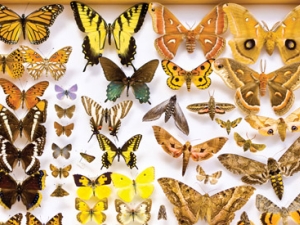
Help Wanted: Public Needed to Uncover Clues in Natural History Collections
Like bugs? Ever wonder what goes on behind the scenes at natural history museums? Interested in helping scientists understand our changing environment? These are just some of the reasons why people should join a project led by UC Berkeley’s Essig Museum of Entomology.
Featured in the Media
Teaching
Field Entomology [ESPM 147 - 003]
Individual Research [ESPM 299 - 078]
Natural History of Insects [ESPM 42 - 001]
Individual Research [ESPM 299 - 071]
Individual Research [ESPM 299 - 078]
Natural History of Insects [ESPM 42 - 001]