

Research Bio
Primary current research efforts comprise experimental searches for the dark matter of the universe, i.e. HAYSTAC (Haloscope At Yale Sensitive to Axion CDM), DM Radio (at SLAC), ALPHA (plasmonic haloscope), data-mining the Breakthrough Listen public data release from the Green Bank Telescope, and supporting microwave technology R&D. Low energy nuclear physics. Accelerator science and technology.
Research Expertise and Interest
Particle Astrophysics, experimental nuclear physics, Accelerator Technology and Neutron Sources
In the News
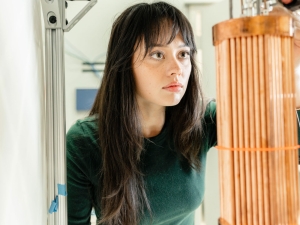
Researchers Awarded $3.7M To Build Next-Generation Haloscope in Search for Dark Matter
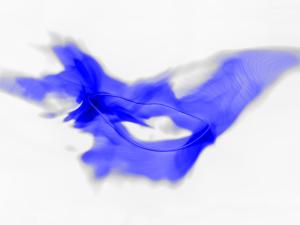
New Simulations Refine Axion Mass, Refocusing Dark Matter Search
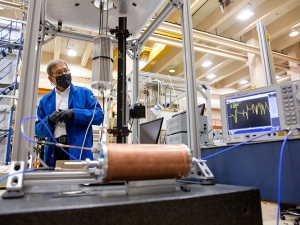
Researchers harness quantum weirdness to speed the search for dark matter
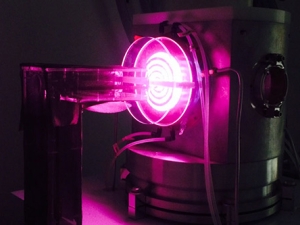
Students make neutrons dance beneath Berkeley campus
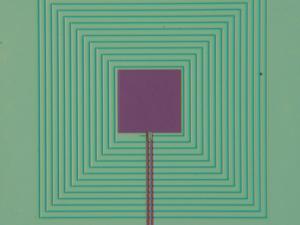
Start of most sensitive search yet for dark matter axion
Featured in the Media
Nuclear engineering students at Berkeley have built a tabletop neutron source that's relatively cheap, portable, and able to produce a narrow but useful range of neutron energies without undesirable radioactive byproducts. "Any hospital in the country could have this thing, they could build it for a few hundred thousand dollars to make local, very short-lived medical isotopes -- you could just run them up the elevator to the patient," says nuclear engineering professor Karl van Bibber, the faculty member overseeing the project. "It has application in geochronology, neutron activation analysis for law enforcement agencies -- when the FBI wants to determine the provenance of a sample as evidence, for example -- neutron radiography, to look for cracks in aircraft parts. This is very compact, the size of a little convection oven; I think it's great, we are excited about this." This story originated at Berkeley News.