
Research Bio
Work in the Arnold Group targets synthetic inorganic chemistry, with the primary goal being to make, purify, and study molecules and materials that are interesting by virtue of their unusual structures and chemical reactivity.
They have extensive experience in the synthesis and study of new and unusual molecular inorganic and organometallic compounds of the d-, p-, and f- block elements. The emphasis is on preparing compounds that exhibit novel reactivity and/or catalytic behavior, particularly in the context of activation of small molecules such as H2, N2, O2, CO2 and N2O. In addition to the dry-box and Schlenk techniques used to prepare and manipulate compounds, they exploit a variety of characterization methods, including multinuclear NMR(link is external), X-ray crystallography(link is external), EPR and electrochemistry.
Research Expertise and Interest
organometallic chemistry, organometallic catalysis, materials chemistry, coordination chemistry
In the News
BCGC Wins $3.4 Million NSF Training Grant: Grad Students Encouraged to Apply
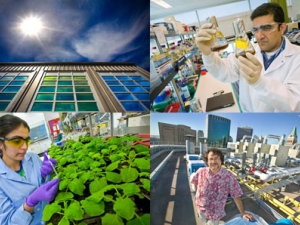
The Berkeley Center for Green Chemistry (BCGC) has been awarded a $3.4 million training grant by the National Science Foundation. The grant will train five to six Ph.D. students annually for five years in the principles of green chemistry and the design of clean energy technologies.
Green Chemistry Conference Highlights UC Berkeley’s Unique Approach
The Berkeley Center for Green Chemistry hosts its first national conference March 24, where experts from a broad range of disciplines will discuss the center’s unique, multidisciplinary approach to creating more sustainable and safer chemicals.