

Research Bio
Gašper Beguš is an Associate Professor at the University of California, Berkeley, where he bridges the fields of linguistics, artificial intelligence, and cognitive science. His research centers on interpretable AI and the study of language in humans, animals, and machines.
Dr. Beguš leads efforts to develop techniques that help us better understand the inner workings of AI. In his Berkeley Biological and Artificial Language lab, he also builds the most realistic models of human language learning—creating an artificial baby language learner.
Serving as the Linguistics Lead at Project CETI, he applies similar tools to the the language of whales and recently showed that sperm whales produce sound patterns analogous to human vowels and that orcas have vowels and consonants.
Dr. Beguš is also the College Principal of Bowles Hall, the oldest residential college in the United States and the only one at UC Berkeley. In this leadership role, he fosters a multi-faceted and multi-generational community where every student can grow personally, professionally, and academically.
His research has been featured in numerous press outlets, including The Guardian, Financial Times, The Atlantic, National Geographic, BBC, NPR, Quanta Magazine, Harvard Magazine, Noema Magazine, and others.
Dr. Beguš regularly appears as an invited speaker in diverse venues such as NYU Stern School of Business, Centre Pompidou, the National Science Foundation, and the Santa Fe Institute. His models inspired parts of the La Biennale di Venezia exhibition and a science fiction book for young audiences.
Research Expertise and Interest
AI interpretability, computational linguistics, AI policy, AI, machine learning, artificial intelligence, cognitive science, neuroscience, philology, Generative AI, deep learning, speech processing, NLP, phonology, articulatory and acoustic phonetics, historical linguistics, marine biology, language and law, Indo-European linguistics
In the News

Sperm Whales Communicate Similar to Humans
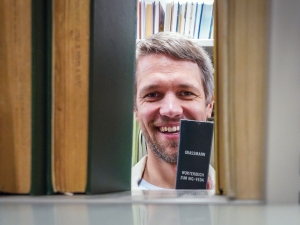
UC Berkeley Linguistics Expert Explains How ‘Language Is Everywhere’

As Chatbots Get Smarter, Humans’ Language Abilities Are Becoming Less Special
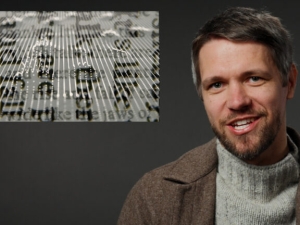
With AI and Linguistics, This Professor Is Decoding How Animals and Humans Communicate
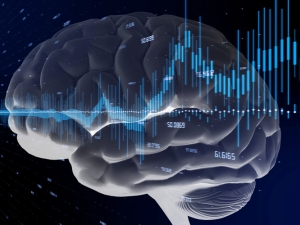
‘Raw’ Data Show AI Signals Mirror How the Brain Listens and Learns
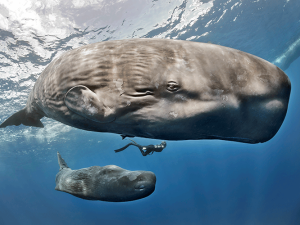
A Race to Converse With, and Save, the Ocean’s Brainiest Eco-Predators
Featured in the Media
Teaching
Biological and Artificial Language [LINGUIS 265 - 001]
Phonology [LINGUIS 111 - 001]
Advanced Phonology I [LINGUIS 211A - 001]