

Research Bio
Dan Weisz is an astrophysicist whose research focuses on galaxy formation, stellar populations, and the evolution of galaxies in the local Universe. He how stars and galaxies form, evolve, and interact over cosmic time using multi-wavelength observations with facilities such as the Hubble and James Webb Space Telescopes. Weisz’s work combines stellar archaeology with near-field cosmology to study how local galaxies inform our knowledge of the very galaxies and cosmic structure in the early Universe. He is a lead scientist for the Ultraviolet Explorer (UVEX) a next-generation NASA mission that will survey the entire sky at ultraviolet wavelengths. UVEX is slated to launch in 2030.
Weisz is an Associate Professor of Astronomy at UC Berkeley. His research has been recognized with multiple award, including the Newton Lacy Pierce Prize from the American Astronomical Society. He mentors students and postdocs in observational astrophysics, stellar evolution, and galaxy formation.
Research Expertise and Interest
observational astrophysics, galaxies, stars, cosmology, early universe, dark matter
In the News
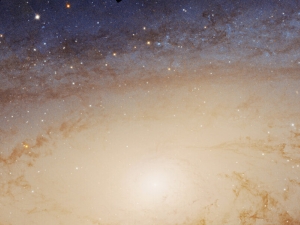
The Andromeda Galaxy Struts Its Stuff
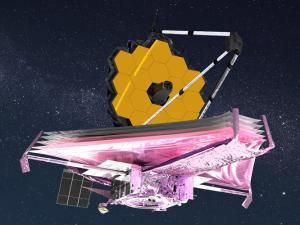
Berkeley Astronomers to Put New Space Telescope Through Its Paces

Young Astronomer Honored for Research on Smallest Galaxies in the Universe
Teaching
Advanced Study and Research [ASTRON 299 - 015]
Special Topics in Astrophysics [ASTRON 250 - 002]
Advanced Study and Research [ASTRON 299 - 006]
Astronomy Colloquium [ASTRON 700 - 001]
Introduction to Current Research [ASTRON 290B - 001]
Advanced Study and Research [ASTRON 299 - 015]
Introduction to Astrophysics [ASTRON 7A - 001]