Research Bio
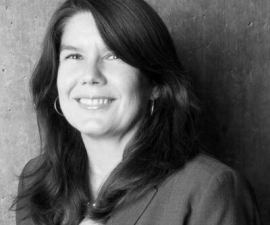
Carolina K. Reid is the I. Donald Terner Distinguished Professor in Affordable Housing and Urban Policy in the Department of City and Regional Planning at the University of California at Berkeley. She also serves as the Faculty Research Advisor for the Terner Center for Housing Innovation, where she oversees the design and execution of the Center’s research agenda and portfolio. Carolina specializes in housing and community development, with a specific focus on access to credit, housing and mortgage markets, urban poverty, and racial inequality. Her current research projects include an assessment of strategies to address homelessness in California, the role that subsidized housing plays in promoting economic mobility among low-income families, and the impact of discrimination in mortgage lending on the racial wealth gap.
Carolina’s work seeks to inform state and federal policy, and she has consulted on projects for the California Department of Housing and Community Development, the U.S. Department of Housing and Urban Development, the Center for Community Capital, Abt Associates, and community development nonprofits. Her scholarship has been covered in national and international media, including the New York Times, the Wall Street Journal, National Public Radio, and local outlets such as the Mercury News, CalMatters, and the San Francisco Chronicle.
Carolina brings nearly two decades of applied work experience to her research and teaching. Before joining the faculty at UC Berkeley, Carolina worked at the Center for Responsible Lending, where she undertook policy analyses on how provisions in Dodd-Frank could affect future access to credit for lower-income and minority households. Carolina also served as the Research Manager for the Community Development Department at the Federal Reserve Bank of San Francisco for six years. At the SF Fed, Carolina published numerous journal and policy articles on topics related to housing and community development, and helped to build the capacity of local stakeholders — including banks, nonprofits, and local governments — to undertake community development activities, especially in the areas of affordable housing, early childcare education, asset building, and neighborhood revitalization.
Carolina has also held positions with the World Resources Institute in Washington, D.C., where she worked on urban environmental issues and the environmental impacts on health; the Environmental Health and Social Policy Center in Seattle, where she contributed to the evaluation of Jobs-Plus, a welfare-to-work demonstration targeted to residents living in public housing developments; and the Millennium Ecosystem Assessment based out of Penang, Malaysia, where she managed an effort to understand how indigenous knowledge about environmental change could be integrated into international environmental decision-making processes. She has a BA from Stanford University and an MA and PhD from the University of Washington, Seattle.
Research Expertise and Interest
Affordable housing, homelessness, access to credit, community development, the Community Reinvestment Act, neighborhood change, homeownership and mortgage finance (with a focus on low-income and minority households)