
Research Bio
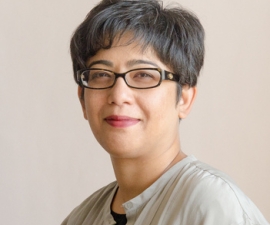
Atreyee Gupta is an art historian specializing in global modernisms, with emphasis on the aesthetic and intellectual circulations that linked Asia, Africa, the Middle East, and Latin America in the twentieth century and beyond. Her research addresses decolonization, Cold War geopolitics, and transnational artistic exchange, with particular focus on India.
Her first monograph, Non-Aligned: Art, Decolonization, and the Third World Project in India (2025), examines the aesthetic resonances of the Non-Aligned Movement and their roots in interwar Afro-Asian anti-colonial networks. She is currently writing a second book, 1968: Art, Revolution, and Radical Imagination in India, which rethinks 1968 as a dispersed field of artistic and political articulation shaped by Third World ideals.
Gupta’s essays have appeared in The Art Bulletin, Art Journal, Third Text, and October, as well as in edited volumes such as Is Art History Global? and Histories of the “Global.” Her work interrogates how the “global” is constituted across material, intellectual, and political registers.
Her collaborations include Postwar Revisited—Towards a Global Art History (with Okwui Enwezor, 2025) and a forthcoming project with Sugata Ray tracing South Asian artistic and architectural histories in the United States.
Gupta co-founded and co-directed the South Asia Art Initiative and has co-curated exhibitions such as When All That Is Solid Melts into Air (2020). At Berkeley, she teaches courses on modern and contemporary Asian American art, South and Southeast Asian art, and postcolonial theory, mentoring students in global art history.
Research Expertise and Interest
Twentieth- and twenty-first-century art and architecture, global modernism, globalization, postwar art history, global art history, third world art, Global South, art and decolonization, Bandung, non-aligned movement, Cold War, atomic, modern and contemporary South and Southeast Asian art
Teaching
AsiaAmerica: Asian American Art and Architecture [HISTART 132AC - 001]
Special Study for Graduate Students in the History of Art [HISTART 299 - 004]