
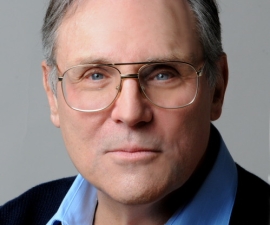
Research Bio
Alex Bell's research specialty is catalysis and chemical reaction engineering with an emphasis on understanding the fundamental relationships between catalyst structure and compostion and catalyst activity and selectivity. The objectives of his program are pursued through a combination of experimental and theoretical methods. Spectroscopic techniques, including IR, Raman, NMR, UV-Visible, and EXAFS, are used to characterize catalyst structure and adsorbed species under actual conditions of catalysis. Isotopic tracers and temperature-programmed desorption and reaction techniques are used to elucidate the pathways via which catalyzed reactions occur. Quantum chemical calculations are conducted to define the structure and energetics of adsorbed species and the pathways by which such species are transformed. The combined use of theory and experimental methods enables the attainment of a deeper understanding of the core issues of interest than can be achieved by the use of either approach alone. These experimental and theoretical methods are used to investigates a wide range of reactions, including the conversion of biomass to fuels and chemical, the conversion of alkanes to alkenes and aromatics, the oxidation of alkenes, the electrochemical reduction of carbon dioxide to fuels and chemicals, and the reduction of nitric oxide. His research honors include the Curtis W. McGraw Award for Research from the American Association of Engineering Education, the Professional Progress, R. H. Wilhelm, and William H. Walker Awards from the American Institute of Chemical Engineers; the Paul H. Emmett Award in Fundamental Catalysis and the Michel Boudart Award from the Catalysis Society; and the ACS Award for Creative Research in Homogeneous or Heterogeneous Catalysis and the Goerge Olah Award in Petroleum or Hydrocarbon Chemistry from the American Chemical Society. Dr. Bell is a member of the National Academy of Sciences, the National Academy of Engineering, a Fellow of the American Association for the Advancement of Science, and an elected member of the American Academy of Arts and Sciences. He also holds the title of Honorary Professor of the Siberian Branch of the Russian Academy of Sciences.
Research Expertise and Interest
chemical engineering, heterogeneous catalysts, spectroscopic techniques, chemical reaction engineering
In the News
Berkeley’s Ecosystem of Innovation, Entrepreneurship Combats Climate Change

Leaving on a Biofueled Jet Plane
The problem is simple to understand. Molecules of carbon and other greenhouse gases absorb heat. The more greenhouse gases emitted into the atmosphere, the warmer the atmosphere becomes, exacerbating global climate change. Solving the problem is not so simple, especially with regards to aviation – the source of two-percent of the annual greenhouse gas emissions from human activity.
Three UC Berkeley professors named to National Academy of Sciences
Two University of California, Berkeley, faculty members were elected members of the National Academy of Sciences (NAS) and a third professor was elected a foreign associate.
College of Chemistry steers course to sustainable 'green' chemistry
The College of Chemistry is moving toward sustainable "green" chemistry with a new emphasis on sustainability in its undergraduate courses, a new endowed chair in sustainable chemistry, and its participation in the campuswide Berkeley Center for Green Chemistry.