
Caroline Williams

Research Bio

Caroline Williams is an integrative biologist whose research investigates the evolutionary physiology of insects, with a focus on adaptation to climate change. She is best known for her studies of metabolic evolution and overwintering physiology, examining how insects survive extreme seasonal environments. Williams’s lab integrates physiology, ecology, and evolutionary biology to explore how metabolic pathways evolve and how climate change alters insect life cycles. Her research provides insights into the resilience and vulnerability of species under environmental stress.

She is an Associate Professor of Integrative Biology at UC Berkeley. Her work has been published in Global Change Biology, Proceedings of the Royal Society B, and Journal of Experimental Biology. Williams has received NSF funding and recognition from the Society for Integrative and Comparative Biology. At Berkeley, she teaches courses in integrative biology and physiology, mentoring students in evolutionary physiology and climate adaptation.

Research Expertise and Interest

evolution, physiology, ecophysiology, metabolism, insect, winter, adaptation, thermal biology

In the News

Tropical species are moving northward as winters warm

Notwithstanding last month’s cold snap in Texas and Louisiana, climate change is leading to warmer winter weather throughout the southern U.S., creating a golden opportunity for many tropical plants and animals to move north, according to a new study appearing this week in the journal Global Change Biology.

Featured in the Media

Please note: The views and opinions expressed in these articles are those of the authors and do not necessarily reflect the official policy or positions of UC Berkeley.
March 19, 2021
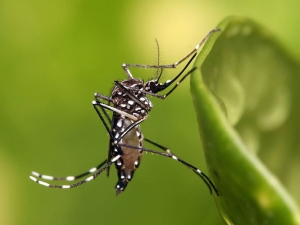
As climate change leads to warmer winters, many tropical plants and animals are moving north, according to a new study appearing this week in the journal Global Change Biology. "Quite a few mosquito species are expanding northward, as well as a lot of forestry pests: bark beetles, the southern mountain pine beetle," said Caroline Williams, associate professor of integrative biology at the University of California, Berkeley, and a co-author of the paper. "In our study, we were really focusing on that boundary in the U.S. where we get that quick tropical-temperate transition. Changes in winter conditions are one of the major, if not the major, drivers of shifting distributions." For more on this, see our press release at Berkeley News.

Teaching

Courses taught during the three most recent terms
2026 Spring
  • Directed Undergraduate Research  [INTEGBI 191]  

  • Supervised Independent Study and Research  [INTEGBI 199]  

  • Special Study for Graduate Students  [INTEGBI 296]  

  • Special Study in Integrative Biology  [INTEGBI 298]  

  • Graduate Research  [INTEGBI 299]  

  • Supervised Independent Study and Research  [INTEGBI 99]  

  • Thesis Course  [INTEGBI H196A]  

  • Thesis Course  [INTEGBI H196B]  

  • Supervised Research: Biological Sciences  [UGIS 192C]  

2025 Fall
  • General Biology Lecture and Laboratory  [BIOLOGY 1B]  

  • Supervised Internship  [INTEGBI 197]  

  • Supervised Independent Study and Research  [INTEGBI 199]  

  • Freshman Seminars  [INTEGBI 24]  

  • Research Seminar  [INTEGBI 291]  

  • Special Study in Integrative Biology  [INTEGBI 298]  

  • Graduate Research  [INTEGBI 299]  

  • Thriving in Academia  [INTEGBI 305]  

  • Thesis Course  [INTEGBI H196A]  

  • Thesis Course  [INTEGBI H196B]  

  • Supervised Research: Biological Sciences  [UGIS 192C]  

2025 Summer
  • Supervised Internship  [INTEGBI 197]  

  • Graduate Research  [INTEGBI N299]  

2025 Spring
  • Directed Undergraduate Research  [INTEGBI 191]  

  • Supervised Internship  [INTEGBI 197]  

  • Supervised Independent Study and Research  [INTEGBI 199]  

  • Research Seminar  [INTEGBI 290]  

  • Special Study for Graduate Students  [INTEGBI 296]  

  • Special Study in Integrative Biology  [INTEGBI 298]  

  • Graduate Research  [INTEGBI 299]  

  • Thesis Course  [INTEGBI H196B]  

  • Supervised Research: Biological Sciences  [UGIS 192C]