
Research Bio
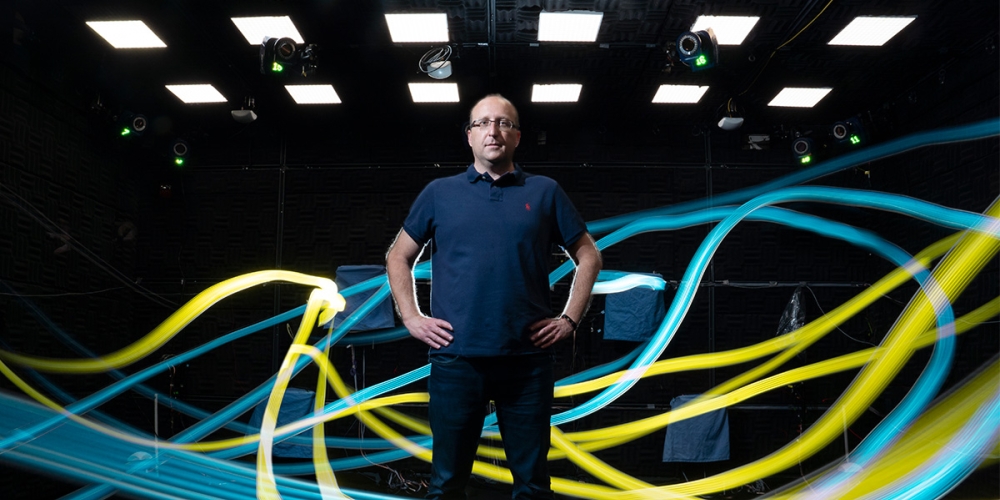
Michael Yartsev is a Howard Hughes Medical Institute (HHMI) investigator and associate professor in the Departments of Bioengineering and Neuroscience. His lab seeks to understand the neural basis of natural spatial, social and acoustic behaviors in mammals. They believe that to truly understand the brain, one needs to carefully select the appropriate model system for the scientific question at hand. Therefore, they utilize one of the most spatially and socially sophisticated mammals - the bat. In the spatial domain, they take advantage of the bat's natural ability to form new spatial memories and execute complex forms of navigation with extreme precision. In the social domain, they utilize the natural desire of bats to interact and communicate with one another in social groups. This allows them to obtain unique insights into the neurobiology of social memory and communication as the underpinnings of group social behavior. To facilitate their research they pioneered a wide range of neural technologies in freely behaving and flying bats for monitoring and manipulating neural activity (e.g., wireless electrophysiology and wireless calcium imaging in individuals, pairs or groups). Together, by taking a neuroethological approach they aim to uncover core principles of brain function that subserve complex natural behaviors in the mammalian brain
Research Expertise and Interest
neuroscience, engineering
In the News

Four UC Berkeley Professors Win Illustrious Guggenheim Fellowships

Scientists Uncover Neural Mechanisms Behind Long-Term Memory
UC Berkeley Professor Michael Yartsev Named Howard Hughes Medical Institute Investigator
Michael Yartsev wins Boehringer Ingelheim FENS Research Award
What Bats Can Teach Us About the Evolution of Human Speech
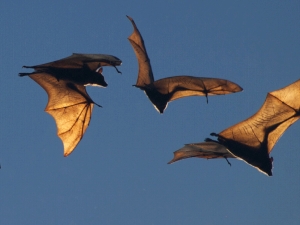
Bat Study Reveals How the Brain is Wired for Collective Behavior
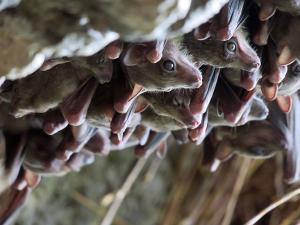
Bat Study Reveals Secrets of the Social Brain

Reinventing the Wheel
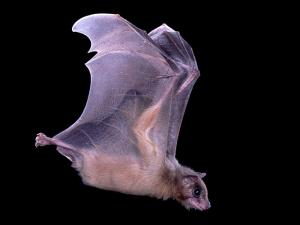
A peek inside a flying bat’s brain uncovers clues to mammalian navigation
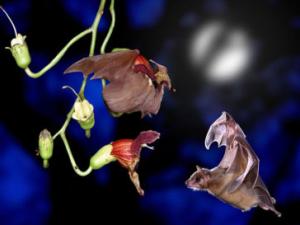
Bats’ brains sync when they socialize
Featured in the Media
Teaching
Interface Between Neuroethology & Neural Engineering [BIOENG 271 - 001]
Individual Study or Research [BIOENG 299 - 024]
Interface Between Neuroethology & Neural Engineering [BIOENG C171 - 001]
Neuroscience Graduate Research [NEU 292 - 033]
Group Studies, Seminars, or Group Research [BIOENG 298 - 003]
Individual Study or Research [BIOENG 299 - 003]
Neuroscience Graduate Research [NEU 292 - 033]
Interface Between Neuroethology & Neural Engineering [BIOENG 271 - 001]
Individual Study or Research [BIOENG 299 - 024]
Interface Between Neuroethology & Neural Engineering [BIOENG C171 - 001]
Neuroscience Graduate Research [NEU 292 - 033]
Interface Between Neuroethology & Neural Engineering [NEU C124 - 001]