
Research Bio
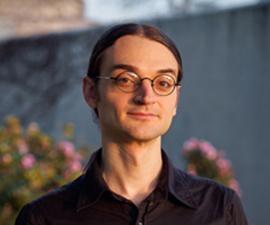
Nicholas Ingolia is a Professor in the Department of Molecular & Cell Biology.
Prof. Ingolia studies how cells dynamically control the translation, localization, and degradation of mRNAs. He does this by developing innovative, high-throughput experimental approaches that address key challenges in RNA biology. Early in his career, he developed ribosome profiling, a technique for comprehensive and high-resolution measurements of translation. More recently, he has focused on the regulatory RNA-binding proteins that bind to specific mRNAs and drive post-transcriptional gene regulation. He developed APEX-seq, which reveals the composition and organization of RNA-protein complexes within living cells. He also studies how RNA-binding proteins affect target mRNAs. These proteins contain folded RNA-binding domains that recognize specific targets along with intrinsically disordered regions that modulate expression of these target mRNAs. Using high-throughput approaches, Prof. Ingolia has delineated functional elements within these disordered regions and connected them with downstream decay endonucleases that explain their function. His work shows how disordered regions can form specific interactions and perform biological functions in the absence of well-defined structure or even sequence. His work has been recognized by awards including the RNA Society Mid-Career Award (2023).
More recently, Prof. Ingolia has also extended his work to dissect the wider regulatory networks that impinge on translation in the cell. He developed CiBER-Seq, a broadly applicable tool to analyze these networks through CRISPR-based screening and high-throughput sequencing. Building on the distinctive capabilities of CiBER-Seq, he seeks to measure how genetic changes alter the dynamics of cellular response to translational stress. This work promises insights into the molecular events that determine how cells adapt to changing conditions and the ways that the strength and timing of stress responses are encoded in the genome.
Research Expertise and Interest
ribosome profiling, translation, genomics
In the News
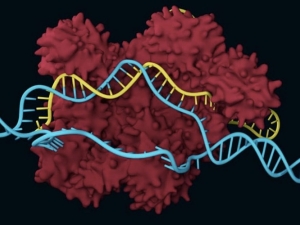
Using CRISPR, New Technique Makes It Easy to Map Genetic Networks
Five Early-Career Faculty Named Rose Hills Innovators
Teaching
Molecular Biology: Macromolecular Synthesis and Cellular Function [MCELLBI 110 - 001]
CRISPR Gene Editing, Stem Cell and Genomic Analysis [MCELLBI 201B - 001]
Scientific Communication and Experimental Rigor Graduate Seminar [MCELLBI 287 - 214]
Research [MCELLBI 292 - 214]
Molecular Biology: Macromolecular Synthesis and Cellular Function [MCELLBI 110 - 001]
Regulation of Translation [MCELLBI 219B - 001]
Research [MCELLBI 292 - 214]
Berkeley Connect in Computational Biology [CMPBIO 198BC - 001]
Berkeley Connect in Computational Biology [CMPBIO 98BC - 001]
Molecular Biology: Macromolecular Synthesis and Cellular Function [MCELLBI 110 - 001]
CRISPR Gene Editing, Stem Cell and Genomic Analysis [MCELLBI 201B - 001]
Regulation of Translation [MCELLBI 219B - 001]
Research [MCELLBI 292 - 214]