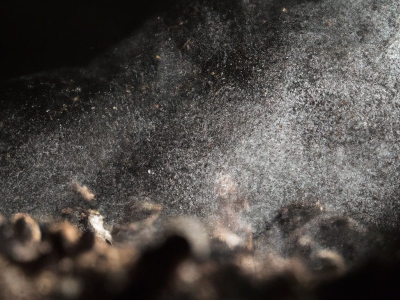
Researchers with the Lawrence Berkeley National Laboratory (Berkeley Lab) through support from the Energy Biosciences Institute (EBI) have literally shed new light on cellulase catalysis.
One often ignored consequence of global climate change is that the Northern Hemisphere is becoming warmer than the Southern Hemisphere, which could significantly alter tropical precipitation patterns, according to a new study by climatologists from the University of California, Berkeley, and the University of Washington, Seattle.
Two faculty members at the University of California, Berkeley, have been named to the National Academy of Engineering (NAE). Election to the NAE is considered one of the most prestigious professional distinctions accorded to an American engineer.
Designing a building holistically, and making sure that its components and systems work together according to design intent, can pay big dividends in energy savings and occupant satisfaction, according to a study of The New York Times Building by the Lawrence Berkeley National Laboratory (Berkeley Lab).
Jay Keasling, UC Berkeley chemical engineer and leader in the field of synthetic biology, is featured on CNN’s “The Next List” for his work on using microbes to create the next generation of fuel.
Heinz Frei, the acting director of the Joint Center for Artificial Photosynthesis at the Lawrence Berkeley National Laboratory was recently featured in the San Francisco Chronicle. JCAP’s efforts focus on generating fuels from sunlight.
The Department of Energy has awarded $4 million over three years to researchers at the University of California, Berkeley, to develop new ways to monitor the stability of electric power grids.
Mechanical engineer Lindsay Miller, PhD 12, knew there was a market for her doctoral thesis project—a device the size of a stick of gum that harvests energy from machinery vibrations, generating enough electricity to run wireless sensors without ever having to change a battery.