2012 - 2013 Fellows
Bakar Fellows Program
2012 - 2013 Fellows
Jose Carmena
EECS and Helen Wills Neuroscience Institute
Skillful control of brain-machine interfaces by humans
Brain-Machine Interface (BMI) technology has tremendous potential to greatly improve the quality of life of millions of people suffering from spinal cord injury, stroke, amyotrophic lateral sclerosis, and other severely disabling conditions. In the long-term, brain-controlled prostheses will be capable of reproducing the wide range of motor functions carried out by the human upper limb, so that patients can enact their voluntary motor intentions simply by thought. The field is currently unbalanced with a variety of robotic solutions to replace missing or paralyzed limbs that clearly exceed the ability of existing neural-interface technology to control them. Here we propose to transform recent advances from our laboratory in the neuroengineering science of BMI into clinically viable solutions. We will exploit neuroplasticity with closed-loop decoding techniques for achieving skillful brain-control of prosthetic devices comparable to natural movements. The Bakar fellowship will facilitate bringing these advances into the clinical and commercial realms.
Jose M. Carmena is an Associate Professor of Electrical Engineering and Neuroscience at UC Berkeley, and Co-Director of the Center for Neural Engineering and Prostheses at UC Berkeley and UC San Francisco. His research program in neural engineering and systems neuroscience is aimed at understanding the neural basis of sensorimotor learning and control, and at building the science and engineering base that will allow the creation of reliable neuroprosthetic systems for the severely disabled. Learn more...
Tanja Cuk
Chemistry
Next generation supercapacitors: Managing pseudocapacitance with metal ions
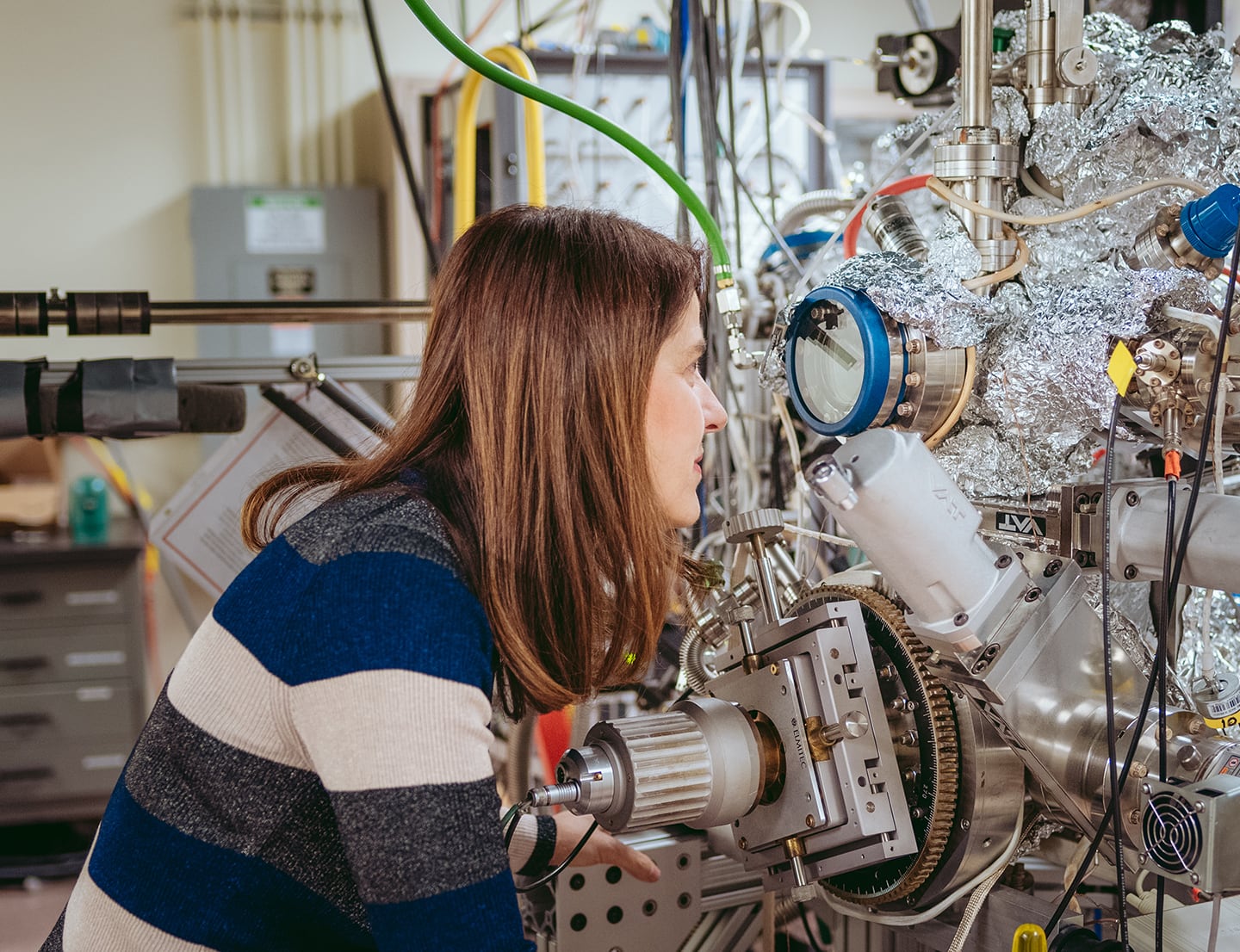
Supercapacitors store energy capacitively, as a surface charge; whereas batteries store energy chemically, via oxidation and reduction reactions. Compared to batteries, they can deliver energy much more rapidly (higher power), show enhanced reliability, and longer charge/discharge cycle lifetimes. The primary disadvantage of supercapacitors is their low energy density. It is well known that the capacitance, and hence the energy stored, can be enhanced 10-100 times by exploiting pseudocapacitance—the capacitance that arises from equilibrium charge transfer between molecules in the electrolyte and the electrode. The purpose of this Bakar fellowship proposal is to increase the number of materials that can be utilized for pseudo-capacitive behavior and explore the limits to energy density stored as a surface charge. This fundamentally new approach involves placing multiple types of metal ions in solution with transition metal oxide electrodes. The consequences will be monitored with electrochemical measurements, x-ray absorption/photoemission, scanning transmission x-ray microscopy, and optical second harmonic generation. The result will be a flexible materials system that can be optimized for performance.
Tanja Cuk graduated from Princeton University with a BSE in Electrical Engineering (2000) and Stanford University with a PhD in Applied Physics (2007). She then went on to complete a Miller Postdoctoral Fellowship at UC Berkeley (2007-2010). She joined the faculty of the Chemistry Department at UC Berkeley as an Assistant Professor in 2010. Her research involves understanding catalytic processes at solid-liquid interfaces using ultrafast optical/infrared spectroscopy and in-situ x-ray spectroscopy. Learn more...
Amy Herr
Bioengineering
Getting personal: Massively multiplexed microanalytical tools for linking proteomics to the drug development pipeline
Personalized medicine is imaginable, but not truly realized. Historically, drug discovery efforts have sought the “blockbuster” drug. Nevertheless, mounting evidence suggests that individual response to treatment is anything but ‘one-size-fits-all’. A personalized approach to medicine has benefitted from understanding the individual’s genetic make-up (e.g., breast cancer). Genomics technology has played a key role in yielding a treasure trove of information unimaginable just five years ago. That said, important individual information is carried at the protein level (i.e., Alzheimer’s disease, prostate cancer) and our protein measurement capabilities are severely lacking. Slow, labor-intensive, qualitative readouts are the norm. To bridge this gap, we propose to radically advance the content and fidelity of protein-level measurements by introducing uniquely-suited multiplexed proteomic technology built on a microsystems/nanomaterials framework. Our approach would yield proteomic data suitable for fusion with genetic information, underpinning truly individual medicine. Patient costs, insurer costs, and pharmaceutical costs would all potentially benefit.
Amy E. Herr received her B. S. degree from Caltech and her M.S. and Ph.D. degrees from Stanford in Mechanical Engineering. From 2002-2007, Dr. Herr was a Biosystems Research staff member at Sandia National Laboratories (Livermore). At UC Berkeley since 2007, Professor Herr’s research focuses on instrumentation innovation to advance quantitation in life sciences and clinical problems – impact spans from tools for fundamental research (cell signaling) to near-patient disease diagnostics. Learn more...
Michel Maharbiz
Electrical Engineering and Computer Science
Neural Dust: a chronic, high density interface to the mammalian brain
Chronic, high-density neural interfaces will enable new therapies in the restoration of limb motor control, speech prostheses, communication devices for “lock-in” patients, and much more. Cal is well-positioned --right now-- to catalyze the creation of a new industry in northern California. I propose a radical technology shift enabling massive scaling in the number of neural recordings from the central nervous system while extending the lifetime of interfaces via three core innovations: a transcranial link which communicates and powers subcutaneous components via GHz radio; an ultra-compliant, polymer substrate with embedded circuitry which acts as both µECoG and bridge to recording sites; a suite of compliant, eventually tetherless, implantable nodes which detect action potentials. While the vision spans several years, specific technologies will be ready for commercialization and the road to clinical impact immediately. This program would facilitate translation and commercialization, creating a much-needed channel between world-class engineering and commercial success.
Michel M. Maharbiz is an Associate Professor of Electrical Engineering and Computer Science at UC Berkeley. Prior to UC Berkeley, he taught at the University of Michigan. He is the co-founder of Tweedle Technologies and has served as vice-president for product development at Quswami. Professor Maharbiz’s current research interests include building micro/nano interfaces to cells and organisms and exploring bio-derived fabrication methods. His group is also known for developing the world’s first remotely radio-controlled cyborg beetles. Learn more...
Michael Rape
Molecular and Cell Biology
Developing first-in-class antagonists of ubiquitin conjugating enzymes
Ubiquitylation is a posttranslational modification that is essential for cell division and survival, and its misregulation has been associated with many diseases, including cancer, chronic inflammation, or neurodegeneration. Small molecule inhibitors of ubiquitylation are attractive candidates for therapeutic approaches against these diseases, yet few strategies to target ubiquitylation enzymes have been established. We propose to develop a small molecule platform to target ubiquitin-conjugating E2 enzymes, which play key roles in cancer cell division and survival. Small molecule antagonists of E2 function will be extensively validated in biophysical apporaches and tested for effects on cancer cell survival in various established model systems. Our technology will open up a new family of enzymes for drug discovery, allowing us to license it to existing Californian biotechnology companies or to use it as the foundation for starting a company aimed at interfering with disease-related ubiquitylation events.
Michael Rape studied Biochemistry in Bayreuth, Germany and received his Ph.D. at the Max Planck Institute of Biochemistry in Martinsried, Germany. At UC Berkeley since 2006 he is an Associate Professor in the Department of Molecular and Cell Biology. His research focuses on how proteins are modified with ubiquitin and how processes in the cell are regulated by ubiquitination as well as ways to alter ubiquitination to treat diseases. Learn more...
Neil Tsutsui
Environmental Science, Policy and Management
Deploying insect pheromones to control a widespread and damaging insect
Insects cause tremendous damage to agricultural products and are costly to control in businesses and residential settings. Moreover, control of insect pests with insecticides degrades water and soil, presents health concerns, and is ecologically damaging. In California, the invasive Argentine ant is the leading pest of households and businesses and causes substantial agricultural losses. I propose three projects that use Argentine ant pheromones to control three important aspects of their biology: queen production, foraging, and aggression. These projects build on my lab’s extensive prior research on Argentine ant genetics, genomics, behavior, and chemical ecology. We have discovered key pheromones that regulate these behaviors, we have synthesized and tested them, and are poised to develop these technologies into market-ready solutions. The Bakar Fellowship will enable us to perform field tests of these proposed control techniques and formulate strategies to take these approaches from the lab to the marketplace.
Neil Tsutsui is an Associate Professor in the Department of Environmental Science, Policy and Management. His research focuses on on ants and bees - how they communicate, why they behave in the ways they do, their ecology, and their evolution. He works in both the field and the lab, using a variety of different approaches. Professor Tsutsui received his B.S. in Biology, specializing in Marine Science from Boston University and his Ph.D. in Ecology and Evolutionary Biology from UC San Diego. Learn more...